 Published: 2024
Genres: Nonfiction, Memoir
Grade Levels: Adult
Content Warnings: Graphic violence
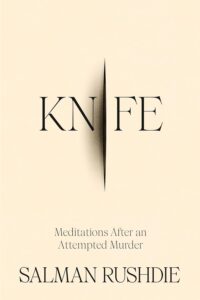
Goodreads Link: Knife: Meditations After an Attempted Murder
Publisher’s Summary:
On the morning of August 12, 2022, Salman Rushdie was standing onstage at the Chautauqua Institution, preparing to give a lecture on the importance of keeping writers safe from harm, when a man in black—black clothes, black mask—rushed down the aisle toward him, wielding a knife. His first thought: So it’s you. Here you are.
What followed was a horrific act of violence that shook the literary world and beyond. Now, for the first time, and in unforgettable detail, Rushdie relives the traumatic events of that day and its aftermath, as well as his journey toward physical recovery and the healing that was made possible by the love and support of his wife, Eliza, his family, his army of doctors and physical therapists, and his community of readers worldwide.
Knife is Rushdie at the peak of his powers, writing with urgency, with gravity, with unflinching honesty. It is also a deeply moving reminder of literature’s capacity to make sense of the unthinkable, an intimate and life-affirming meditation on life, loss, love, art—and finding the strength to stand up again.
Review:
I was shocked, like most of the world, to hear about the attempted assassination of Salman Rushdie on August 12, 2024. Rushdie was speaking at The Chautauqua Institute, a place I had visited myself, which made the brutality of the event even more unsettling. Understanding the attack through the lens of Rushdie’s long-standing history with the fatwa ordered by Iran’s Ayatollah Khomeini added another painful layer, underscoring how deeply violence, censorship and artistic freedom are intertwined in his life.
Knife focuses not on the earlier decades of threat—recounted in Joseph Anton—but on the 2022 attack and Rushdie’s grueling aftermath. It is both hard hitting and unexpectedly poetic, as Rushdie reflects on creativity, mortality and the fragility of the body. His meditations on art and survival resonate powerfully, though the narrative at times feels disjointed, with anecdotes that drift away from the central thread. Additionally, Rushdie’s many televised interviews about the book lessened some of the emotional impact since key reflections are echoed nearly verbatim in the text. Despite this, the memoir remains a compelling examination of endurance, artistic defiance and the ongoing fight for the freedom to write without fear.
Curricular Connections:
Useful in courses exploring censorship, free speech, trauma narratives, memoir structure, authorial voice and contemporary literary history. Strong pairing with units on banned books, global politics and the role of art in resisting oppression.