 Review By: Anonymous
Published: 2024
Genres: Historical Fiction, Adult Fiction
Audience: Grade 12, Adult
Number of Stars: ★★★★★ (5/5)
Goodreads Link: The Briar Club
Content Warnings: Racism, violence
Publisher’s Summary
Washington, D.C., 1950. Everyone keeps to themselves at Briarwood House, a down-at-the-heels all-female boardinghouse in the heart of the nation’s capital, where secrets hide behind white picket fences. But when the lovely, mysterious widow Grace March moves into the attic, she draws her oddball collection of neighbors into unlikely friendship: poised English beauty Fliss whose facade of perfect wife and mother covers gaping inner wounds; police officer’s daughter Nora, who is entangled with a shadowy gangster; frustrated baseball star Bea, whose career has ended along with the women’s baseball league of WWII; and poisonous, gung-ho Arlene, who has thrown herself into McCarthy’s Red Scare.
Grace’s weekly attic-room dinner parties and window-brewed sun tea become a healing balm on all their lives, but she hides a terrible secret of her own. When a shocking act of violence tears apart the house, the Briar Club women must decide once and for all: Who is the true enemy in their midst? Capturing the pa1ranoia of the McCarth2y era and evoking the changing roles for women in postwar America, The Briar Club is an intimate and thrilling novel of secrets and loyalty put to the test.
Review
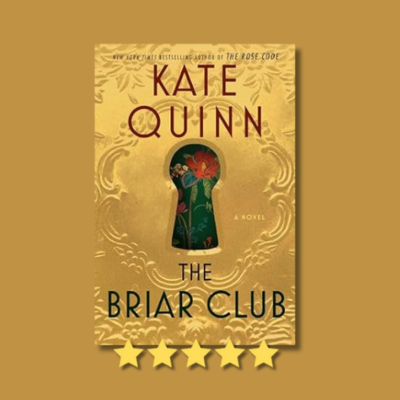
The Briar Club by Kate Quinn is a historical fiction novel set in Washington, D.C. during the 1950s. The story is focused on the residents of an all-female boardinghouse run by Mrs. Nilsson during the tense early years of the Cold War. The story unfolds through multiple perspectives, each chapter rotates, focusing on a different woman with a very different background, and what brought them to the boardinghouse. The characters include an English nurse, a female baseball star, a refugee from Hungary, a young woman from Ireland, a McCarthyite, the landlady, the landlady’s two children and a mysterious widow.
As their lives intersect, the women and the landlady’s children learn about one another and form bonds with one another. Throughout the story, it is revealed how each character arrived at the house. Each character breaks down their protective walls and become friends who build each other up. In doing this, they learn that not all is how it appears. Each person carries a burden or holds a secret. However, these secrets from the past gradually surface, one secret turned deadly. After helping each character find his or her importance, it is revealed that the mysterious widow, Grace, was actually a former spy on the run from her old life with a love for the country she was supposed to be working against. This led to an act of violence in self-defense that shows what all these friends are all willing to risk to protect one another, tying them together for life.
I really enjoyed reading this novel and found it to be very engaging. Quinn really gives the reader a good understanding of each character and why they carry themselves the way they do. Each chapter left me wanting to read more to piece the story together. The major themes in the novel include female solidarity, secrecy, identity, and the cost of survival in a politically charged era. This book really showed the fear and paranoia people experienced during this time in history, highlighting how the pressure of society can force people to hide who they really are. Friendship, acceptance, and chosen family emerge as powerful forces that help the characters endure hardship and become their authentic selves.
🏛️ Historical Spotlight: McCarthyism & The Red Scare
A central pillar of the novel is the oppressive atmosphere of the 1950s. To understand why the characters are so guarded, it is vital to understand the “Red Scare.”
- The Climate of Fear: Senator Joseph McCarthy led a campaign to expose “subversives” and communists within the U.S. government and society.
- Social Conformity: This era demanded strict adherence to traditional roles; any deviation or “secret” could be weaponized by neighbors or the state as a sign of disloyalty.
- Women’s Roles: Post-WWII, women were pushed back into domestic spheres. The Briar Club highlights those who didn’t fit that mold—athletes, professionals, and immigrants.
📝 Classroom Applications
For high school students, this novel offers strong curricular connections to U.S. history and literature:
- Perspective-Taking: Have students write character journals from different residents’ viewpoints to analyze how the same events are perceived based on different backgrounds.
- Historical Research: Assign presentations on real-world events referenced in the book, such as the All-American Girls Professional Baseball League or the McCarthy hearings.
- Ethical Debates: Lead a discussion on loyalty vs. safety. When is it right to keep a friend’s secret, even if it puts you in danger?
- Character Arc Mapping: Track how characters like Bea or Fliss grow from isolated individuals into a “chosen family” and identify specific turning points in the text.