 Review By: Anonymous
Published: 2021
Genres: Popular Psychology, Nonfiction, Self-Help
Audience: Grade 12, Adult
Number of Stars: ★★★★★ (5/5)
Goodreads Link: Atlas of the Heart
Content Warnings: None.
Publisher’s Summary
In Atlas of the Heart, Brené Brown takes us on a journey through eighty-seven of the emotions and experiences that define what it means to be human. As she maps the necessary skills and an actionable framework for meaningful connection, she gives us the language and tools to access a universe of new choices and second chances—a universe where we can share and steward the stories of our bravest and most heartbreaking moments with one another in a way that builds connection.
Over the past two decades, Brown’s extensive research into the experiences that make us who we are has shaped the cultural conversation and helped define what it means to be courageous with our lives. Atlas of the Heart draws on this research, as well as on Brown’s singular skills as a storyteller, to show us how accurately naming an experience doesn’t give the experience more power—it gives us the power of understanding, meaning, and choice.
Full Review
Atlas of the Heart by Brené Brown is not a story, but a thoughtful guide to understanding emotions and connection. Brown organizes the book like a map, exploring more than 80 feelings and experiences and offering clear definitions, real-life examples, and reflection prompts. As a school counselor, I found it especially relevant because it reinforces what we see daily: students often don’t have the words to describe what they feel, and that gap can lead to misunderstanding, acting out, or shutting down.
The book’s biggest strength is its emphasis on emotional vocabulary and language. Brown shows how naming emotions accurately can help people understand themselves and communicate more honestly with others. Themes like shame, vulnerability, belonging, resilience, and empathy are woven throughout, and they reflect the core issues many students face in school. The tone is compassionate and accessible, and the content feels practical rather than academic.
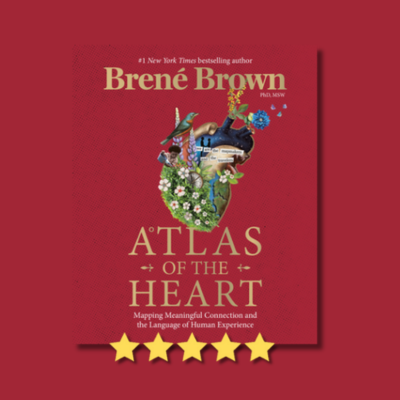
The illustrations by Gavin Aung Than are simple and supportive, reinforcing the “map” idea without overwhelming the text. The cover might not immediately attract younger readers, but mature teens and adults would likely be drawn in, especially if they’re already familiar with Brown’s work.
Curricularly, this book aligns well with SEL, mental health education, and leadership. It could be used for staff development, counseling groups, or advisory lessons. Activities like emotion mapping, journaling, and small-group discussions would work well alongside it. I would highly recommend this book to school counselors, educators, and anyone who wants to strengthen emotional awareness and connection in their school community. It is a true treasure!
🗺️ Mapping the Interior: The Power of Language
One of Brown’s core arguments is that “language is our portal to meaning-making.” When we lack the vocabulary to distinguish between, for example, disappointment and discouragement, we lose the ability to navigate the experience effectively.
🧠 The Counselor’s Framework
For educators and staff, the book provides a common language to help students navigate the “Hills and Valleys” of the school day:
| The Core Concept | Why It Matters in School |
| Granularity | Moving beyond “I’m mad” to “I’m feeling slighted” allows for better problem-solving. |
| Vulnerability | Creating a classroom culture where “not knowing” is seen as a step toward growth. |
| Empathy vs. Sympathy | Teaching students to “climb into the hole” with a friend rather than looking down from the top. |
📝 Classroom & Counseling Applications
- Emotion Mapping: Have students create their own “Atlas” of a typical school week, identifying where they encounter specific feelings (e.g., Anxiety at the locker, Belonging in the art room).
- Vocabulary Expansion: Introduce one “Emotion of the Week” from the book during advisory or morning meetings to build collective literacy.
- Staff Professional Development: Use the book’s sections on “Shame” and “Comparison” to discuss staff culture and how to build a more resilient educational environment.