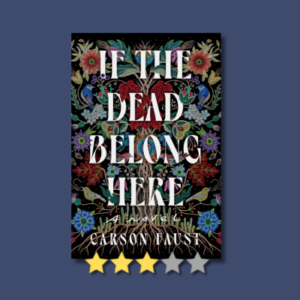
 Published: 2025
Author: Carson Faust
Genres: Indigenous Fiction, Southern Gothic, Horror, Mystery
Audience: Grades 10–12, Adult
Number of Stars: ★★★☆☆ (3/5)
Goodreads Link: If the Dead Belong Here
Content Warnings: Alcohol and drug use, death of a child, and supernatural terror.
Publisher’s Summary
When a young girl goes missing, the ghosts of the past collide with her family’s secrets in a mesmerizing Native American Southern Gothic
When six-year-old Laurel Taylor vanishes without a trace, her family is left shattered, struggling to navigate the darkness of grief and unanswered questions. As their search turns to despair, Laurel’s older sister, Nadine, begins experiencing nightmares that blur the line between dream and reality, and she becomes convinced that Laurel’s disappearance could be connected to other family tragedies. Guided by her elders, Nadine sets out to uncover whether laying the ghosts to rest is the key to finding her sister and healing her fractured family.
Carson Faust captivates in this chilling literary debut that confronts the specter of colonization and the generational scars it leaves on Native American families. Steeped in Indigenous folklore and drawing from the author’s own family history, If the Dead Belong Here examines what it means to be haunted—both by the supernatural and by terrors of our own making. Faust crafts a powerful, kaleidoscopic tale about the complicated legacies of violence that shape our present, the importance of honoring our past, and the resilience of a family—and a people—determined to heal from old wounds.
Full Review
I enjoy reading about Native American people and hoped this book would give me new insight into this particular group of Indigenous women. While the main character is strong, and I appreciated her strength of will and focus, I was ultimately left wanting more.
The story felt like it just ended rather than reaching a true conclusion or a cliffhanger. I was hoping the little girl was still alive or would be brought back from the “other side of the river,” but she wasn’t. I also thought the book would go into more depth about the magic these Indigenous women passed down. The climax features a significant ceremony and ritual, but I wanted it explained more—why were the women doing what they were doing, and how was the ritual supposed to reach “across the river?”
There were many critical points of understanding left out of the story for me. An addendum exploring the rituals and how the magic works across generations would have helped me truly enjoy the story.
🎒 Classroom & Curricular Connections
- English (Genre Study): Compare Indigenous Gothic to traditional European Gothic (like Frankenstein or Dracula). How do Indigenous authors use “hauntings” to discuss the history of the land?
- Social Studies (Indigenous History): Discuss the “specter of colonization” mentioned in the summary. How does historical violence against Indigenous families create “generational scars”?
- Creative Writing (World Building): As the review suggests, have students write an “addendum” or a “preface” for a ritual in the book. If they were the author, how would they explain the mechanics of the magic?
- Comparative Literature: Pair this with The Marrow Thieves or The Only Good Indians to explore different ways Native American authors use the supernatural to tell stories of resilience.