 Published: 2022
Author: Rimma Onoseta
Genres: YA Realistic Fiction, Contemporary, Global Perspectives
Audience: Grades 11–12, Adult
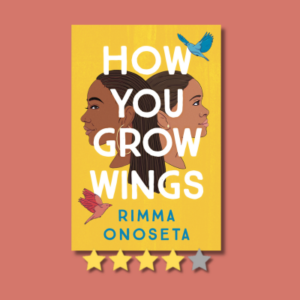
Number of Stars: ★★★★☆ (4/5)
Goodreads Link: How You Grow Wings
Content Warnings: Physical and emotional abuse, systemic misogyny, violence, language, and discussions of sex and drugs.
Publisher’s Summary
An emotionally riveting novel for fans of Ibi Zoboi and Erika L. Sánchez about two sisters in Nigeria and their journey to break free of an oppressive home. Sisters Cheta and Zam couldn’t be more different. Cheta, sharp-tongued and stubborn, never shies away from conflict—either at school or at home, where her mother fires abuse at her. Timid Zam escapes most of her mother’s anger, skating under the radar and avoiding her sister whenever possible. In a turn of good fortune, Zam is invited to live with her aunt’s family in the lap of luxury. Jealous, Cheta also leaves home, but finds a harder existence that will drive her to terrible decisions. When the sisters are reunited, Zam alone will recognize just how far Cheta has fallen—and Cheta’s fate will rest in Zam’s hands.
Debut author Rimma Onoseta deftly explores classism, colorism, cycles of abuse, how loyalty doesn’t always come attached to love, and the messy truths that sometimes family is not a source of comfort and that morality is all shades of gray.
Full Review
How You Grow Wings is a thought-provoking and at times painful account of two sisters navigating a fractured upbringing in a Nigerian village. I was originally drawn to this book because of my interest in stories about dysfunctional family relationships, and Rimma Onoseta delivers a harrowing look at how different children in the same household can be dealt very different hands.
The contrast between the sisters is striking. Cheta bears the brunt of their mother’s abuse, her fighting spirit often leading to further consequences, while Zam’s quiet compliance earns her a glimmer of favor. The book brilliantly explores the systemic misogyny and classism in Nigeria that dictate the girls’ choices. This isn’t “inspirational poverty porn”; instead, it is a gritty look at how personality is forged by circumstance.
The morality in this story is complex and heavy. Cheta is a difficult character to love, yet her bravery in the face of survival is undeniable. Meanwhile, Zam’s evolution from a meek follower to a woman with a strong, independent voice is compelling. The “morally gray” ending, where Zam must decide whether to protect Cheta’s darkest secrets, provides incredible fodder for book club discussions.
🎒 Classroom & Curricular Connections
- Global Studies (Contemporary Nigeria): Use the book to discuss the socioeconomic divide in modern Nigeria. Research the differences between village life and the luxury of cities like Lagos or Abuja.
- Psychology (Family Systems Theory): Analyze the “Scapegoat” vs. “Golden Child” roles in dysfunctional families.
-
Activity Idea: Identify specific scenes where the mother treats Cheta and Zam differently for the same behavior. How does this differential treatment create the rift between the sisters?
-
- ELA (Morality & Ethics): Discuss the “Morally Gray” ending.
-
Activity Idea: Host a Socratic Seminar. Is loyalty to family more important than “doing what is right”? If Zam tells the truth, she ruins Cheta; if she lies, she becomes complicit. What would you do?
-
- Women’s Studies (Misogyny & Agency): Explore the systemic barriers Cheta faces as a young woman with no money or male protection. How does the “sharp tongue” that the mother hates actually become Cheta’s tool for survival?
- Creative Writing (Perspective Shift): Write a scene from the mother’s perspective. Does she view her behavior as “discipline” or “abuse”? How does her own history influence how she treats her daughters?