 Published: 2022
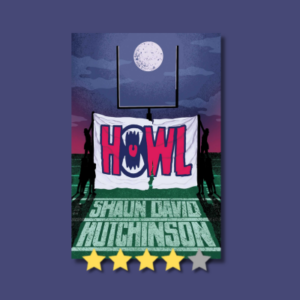
Author: Shaun David Hutchinson
Genres: YA Horror, Paranormal, LGBTQ+
Audience: Grades 9–12
Number of Stars: ★★★★☆ (4/5)
Goodreads Link: Howl
Content Warnings: Sexual assault (metaphorical/monster attack), physical violence, trauma, strong language, and underage drinking.
Publisher’s Summary
From critically acclaimed Shaun David Hutchinson comes a gritty and raw portrayal of the oftentimes traumatic experience of growing up.
Virgil Knox was attacked by a monster.
Of course, no one in Merritt believes him. Not even after he stumbled into the busy town center, bleeding, battered, and bruised, for everyone to see. He’d been drinking, they said. He was hanging out where he wasn’t supposed to, they said. It must’ve been a bear, or a badger, or a gator—definitely no monster.
Virgil doesn’t think it was any of those things. He’s positive it was a monster. But being the new kid in a town where everybody knows everybody is hard enough as it is without being the kid who’s afraid of monsters, so he tries to keep a low profile.
Except he knows the monster is still out there. And if he isn’t careful, Virgil’s afraid it’ll come back to finish him off, or worse—that he’ll become one himself.
Full Review
Howl is a sensitive and inclusive take on the classic werewolf trope. What makes this story stand out is its focus on the psychological aftermath of an attack rather than just the “creature feature” elements. Shaun David Hutchinson includes a note at the beginning of the book explaining that the monster attack is a metaphor for sexual assault (SA). While I personally would have preferred to discover that layered meaning on my own, the trigger warnings are vital for many readers, as Virgil’s struggle to be believed and his feelings of isolation deeply mirror the experiences of SA survivors.
The book is exceptionally strong in its representation of the LGBTQ+ community. Virgil’s sexual orientation is handled with nuance, and the story includes various queer characters navigating life in a small Florida town.
My only hesitation in recommending this to every student is its length. At over 400 pages, the story feels unnecessarily long in places, and some students might find the pacing a bit slow for a horror novel. However, for those who stick with it, it is a rewarding and “fresh” horror story that is perfect for the October season.
🎒 Classroom & Curricular Connections
- ELA (Literary Theory & Metaphor): Discuss the concept of “The Monstrous Other.” How do authors use supernatural elements to discuss “taboo” or difficult topics like sexual assault or mental health?
-
Activity Idea: Compare Virgil’s “monster” to other famous literary monsters (like Frankenstein’s creature or Grendel). What human fear does each one represent?
-
- Social Studies/Sociology: Explore the “Small Town Dynamic.” How does the “everybody knows everybody” atmosphere in Merritt contribute to Virgil’s isolation? Discuss the importance of community support systems in trauma recovery.
- Health & Wellness (Consent and Trauma): Use the book’s metaphor to talk about the importance of believing survivors.
-
Activity Idea: Discuss the “Mandated Reporter” process. If Virgil were a real student in your school, what steps would be taken to ensure his safety and mental health support?
-
- Creative Writing (Unreliable Narrators): Virgil is positive he saw a monster, but the town is positive he didn’t.
-
Activity Idea: Write a scene from the perspective of one of the townspeople watching Virgil stumble into the center. How does their bias change how they describe his injuries?
-