 Published: 2023
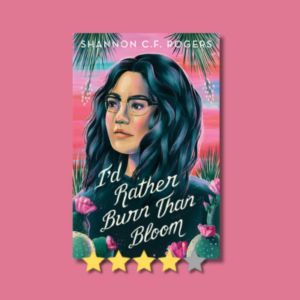
Author: Shannon C.F. Rogers
Genres: YA Contemporary, Realistic Fiction
Audience: Grades 9–12, Adult
Number of Stars: ★★★★☆ (4/5)
Goodreads Link: I’d Rather Burn Than Bloom
Content Warnings: Death of a parent (mother), grief, physical altercation (punching), and infidelity (cheating).
Publisher’s Summary
Packed with voice, this is a powerful coming-of-age YA novel about a Filipina-American teen who tries to figure out who she really is in the wake of her mother’s death. Some girls call their mother their best friend. Marisol? She could never relate. She and her mom were forever locked in an argument with no beginning and no end.
But when her mother dies suddenly, Marisol is left with no one to fight against, haunted by all the things that she both said and didn’t say. And when Marisol sleeps with her best friend’s boyfriend—and then punches said best friend in the face—she’s left alone, with nothing but a burning anger. And Marisol is determined to stay angry. After all, there’s a lot to be angry about. But as a new friendship begins to develop, Marisol reluctantly starts to open up to her, and to the possibility there’s something else on the other side of that anger—something more to who she is, and who she could be.
Full Review
I’d Rather Burn Than Bloom is an emotional journey that hurts in the best and most honest way possible. This is not a light read; from the first chapter, the novel carries a quiet, persistent ache that reflects the rawness of grief and the complicated love within families.
At the center is Marisol, a Filipina-American teenager whose already strained relationship with her mother makes the sudden loss even more devastating. Their final encounter—filled with tension and unresolved frustration—haunts her, and that lingering guilt becomes one of the most powerful emotional threads in the story. Rogers does an exceptional job of crafting characters who feel deeply real; they process grief in ways that are not always healthy, making questionable choices that might frustrate readers. Yet, their flaws make them human, and their pain feels authentic.
This book is incredibly relatable for students. Many young readers will identify with Marisol’s complicated feelings toward a parent. The novel doesn’t shy away from the messy reality of loving someone while feeling misunderstood by them. It forces readers to confront an uncomfortable truth: we never know when a conversation might be our last. It is a powerful exploration of family, regret, and the fragility of time.
🎒 Classroom & Counseling Connections
- Counseling (Healthy Coping Mechanisms): Use Marisol’s actions as a case study. Discuss the difference between Avoidance Coping (punching, lashing out) and Approach Coping (talking, journaling, therapy).
- ELA (Voice & Characterization): Analyze Rogers’ use of “voice.” How does Marisol’s internal monologue reflect her cultural identity as a Filipina-American and her external identity as a “rebel”?
- Social-Emotional Learning (SEL): Discuss the “last conversation” theme. Facilitate an activity where students write a “Just in Case” letter to a loved one, expressing things they appreciate but might not say daily.
- Identity & Heritage: Explore how Marisol’s heritage plays a role in her grieving process. Are there specific cultural expectations of “the perfect daughter” that fuel her guilt?