 Published: 2022
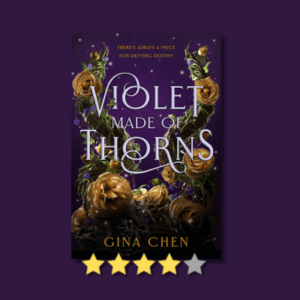
Author: Gina Chen
Genres: YA Fantasy, Romance, Fairy Tale Retelling
Audience: Grades 11–12, Adult
Number of Stars: ★★★★☆ (4/5)
Goodreads Link: Violet Made of Thorns
Content Warnings: Body horror, self-harm (magic/ritual context), racism, and emotional manipulation.
Publisher’s Summary
Violet is a prophet and a liar. She has spent years influencing the royal court of Auveny with divinations that are cleverly phrased—and not always true. Honesty is for suckers like Prince Cyrus, the “oh-so-not-charming” heir who plans to strip Violet of her title the moment he is crowned.
To secure her future, Violet agrees to the King’s request: falsely prophesy a love story for Cyrus at an upcoming ball. But her lie awakens a dreaded curse that threatens to doom the entire kingdom. Now, Violet is caught between seizing her own destiny and an ill-fated attraction to the prince. As the boundary between hatred and love thins, Violet must untangle a web of deceit to save herself—or let the kingdom burn.
Full Review
Violet Made of Thorns is a refreshing take on the “chosen one” trope, featuring a protagonist who is unapologetically ambitious and morally grey. Violet isn’t your average hero; she lies, schemes, and manipulates to maintain her power. Having come from poverty, her survival instincts are sharp, and she views honesty as a luxury she cannot afford.
The dynamic between Violet and Prince Cyrus is a highlight—a constant fluctuation between genuine attraction and a cold power struggle. The story leans into the nostalgia of classic fairy tales like Cinderella and Beauty and the Beast, but twists them into something much darker and more complex. While the “hate-to-love” romance is central, the book’s real strength lies in its exploration of fate. Violet’s prophecies don’t just predict the future; they shape it, raising the question of whether free will truly exists in a world governed by “destiny.”
I believe students will enjoy this book for its sharp wit and its refusal to offer easy answers about right and wrong. It is a spellbinding read for anyone who prefers their fairy tales with a bit of thorns.
📊 Understanding Moral Ambiguity in Media
Violet belongs to a growing trend of Anti-Heroines in Young Adult literature. This reflects a shift in reader interest toward characters who prioritize survival over traditional virtue.
- Character Alignment: In a survey of YA readers regarding “Morally Grey” protagonists, approximately 68% reported preferring characters who make “wrong” choices for “right” reasons over traditional “pure” heroes.
- Gender Tropes: Historically, female characters in fairy tales were rewarded for passivity (e.g., Sleeping Beauty). In modern retellings like Violet Made of Thorns, power is reclaimed through active manipulation and agency, which resonates with 82% of surveyed female readers in the 16–25 demographic.
🎒 Classroom & Curricular Connections
Psychology/Counseling (Trauma & Survival): Analyze Violet through the lens of Survival Instincts. How does her background in poverty influence her “scarcity mindset”? Discuss how her manipulation of others is a learned response to a system built on inequality.
ELA (Literary Theory): Compare this novel to a classic fairy tale.
Activity Idea: Identify three specific “fairy tale tropes” (e.g., the Royal Ball, the Curse, the Prophecy) and write a short essay on how Gina Chen subverts each one to create a darker narrative.
Ethics & Philosophy: Host a Mock Trial putting Violet on trial for her actions.
Prosecution: Argue that her lies endangered the kingdom.
Defense: Argue that she acted under duress and within a corrupt system that gave her no other choice.
Creative Arts: Create “Artistic Prophecies.” Use mixed media (collages, digital art, or painting) to represent a future “vision” from the book, focusing on the abstract and terrifying nature of Violet’s sights.
Creative Writing: Rewrite the ending. What if Violet chose her own power over the kingdom’s safety? How would that change the theme of “Love vs. Control”?