 Published: 2020
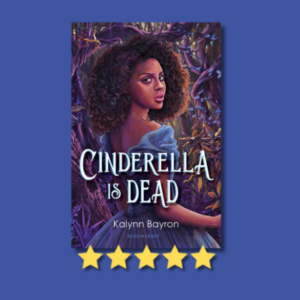
Author: Kalynn Bayron
Genres: YA Fantasy, Dystopian, LGBTQ+ Retelling
Audience: Grades 7–12
Number of Stars: ★★★★★ (5/5)
Goodreads Link: Cinderella Is Dead
Content Warnings: Domestic violence, homophobia, misogyny, physical assault, and death.
Publisher’s Summary
Full Review
Cinderella Is Dead is a brilliant, high-stakes reimagining that turns a classic story on its head. Kalynn Bayron starts with three powerful questions: What effect do these tales have on us? What happens when characters don’t look or love like us? And when do we get to be our own heroes?
The protagonist, Sophia, is a breath of fresh air. Living in a dystopian world where men hold absolute power and heterosexuality is enforced by law, Sophia’s refusal to conform is both dangerous and deeply inspiring. The book does an incredible job of showing how “tradition” can be used as a weapon to marginalize women and the queer community.
I’ve read this book several times, and it hits just as hard every time. It challenges readers to rethink the messages we consume and the stories we are told to memorize. This isn’t just a fantasy novel; it’s a call to action for anyone who has ever felt excluded from a “happily ever after.” It is a must-have for any library and a perfect conversation starter for students about empathy, justice, and representation.
👑 The Power of Storytelling as Control
The book explores how “The Story” (the mandatory recitation of Cinderella) acts as a form of Propaganda.
- Erasing History: By mandating one version of Cinderella’s life, the King erases the truth of her rebellion and her suffering.
- Internalized Misogyny: The ball forces women to compete against one another for survival, preventing them from forming the alliances needed to revolt.
- Queer Erasure: By framing the “Prince and Princess” dynamic as the only path to safety, the system attempts to make queer identities like Sophia’s invisible.
🎒 Classroom & Curricular Connections
-
ELA (Literary Retellings & Subversion): Compare this novel to the traditional Perrault or Grimm versions of Cinderella.
Activity Idea: Discuss the “Hero’s Journey.” How does Sophia’s journey differ from the traditional “passive” Cinderella? Why is it significant that Sophia finds her answers in a tomb?
-
Social Studies (Patriarchy & Power Dynamics): Use Mersailles as a case study for autocratic societies.
Activity Idea: Research the Sumptuary Laws of the Middle Ages (laws that regulated what people could wear based on class). How does the mandatory dress code for the Ball in the book mirror historical attempts to control people through appearance?
-
Media Literacy (Critical Consuming): Analyze the author’s questions about representation.
Activity Idea: Look at three other “classic” fairy tales. Who is missing from those stories? How would those stories change if the protagonist was Black or LGBTQ+?
-
Social-Emotional Learning (Advocacy): Sophia realizes the world is “wrong and harmful” and decides to fight.
Activity Idea: Discuss the difference between Individual Resistance (Sophia running away) and Systemic Change (Sophia joining forces with others to change the law).