 Published: 2024
Series: Iron Widow Series, Book 2
Genres: Science Fiction, Fantasy, Suspense
Grade Levels: 7, 8, 9, 10, 11, 12, Adult
Content Warnings: Violence
Format: Hardcover or Softcover Book
Goodreads Link: Heavenly Tyrant
Publisher’s Summary:
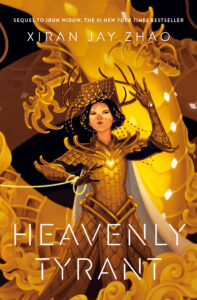
Pacific Rim meets The Handmaid’s Tale in this blend of Chinese history and mecha science fiction for YA readers. After suffering devastating loss and making drastic decisions, Zetian finds herself on the seat of power in Huaxia, but she has also learned that her world is not as it seems. Revelations about an enemy who dangles one of her loved ones as a hostage force Zetian to share power with a dangerous man she cannot simply depose. Despite their mutual dislike and distrust, the two must work together to take down their common enemy and stoke a revolution against the systems of exploitation that plague their world. However, power is not so easy to wield once seized, and a revolution is not so easy to control once unleashed. As Huaxia’s former elites strike back and the common people’s fervor for justice turns bloody and paranoid, can Zetian remain a fair and just ruler? Or will she be forced to rely on fear and violence and succumb to her darker instincts in her quest for vengeance and liberation?
Review:
I was thrilled to return to the world introduced in Iron Widow. I absolutely loved the first novel with its bold voice, dynamic world, and unforgettable characters that drew me in immediately. My favorite character, without question, has always been Zetian. Her fire, her strength, and her complexity made Iron Widow a standout read, and I was eager to see how her character would continue to grow in Heavenly Tyrant.
While the sequel certainly retains Xiran Jay Zhao’s powerful themes including feminism and the ongoing fight for equality, I found myself missing some of what made the first novel so engaging. Heavenly Tyrant shifts heavily toward politics, ideology and conflict between the warring factions. While these topics are important and thoughtfully developed, the focus drifted away from the character driven relationships that made Iron Widow resonate so deeply with me.
Rather than exploring her personal journey and the relationships formed in the first book, the narrative often prioritized world issues over the emotional threads that originally anchored the story. That is not to say the novel lacks merit, it still is committed to equality and its critique of oppressive systems remains compelling and valuable.
Overall, while I appreciated the feminist themes and the boldness of Zhao’s vision, Heavenly Tyrant did not fully meet my expectations as a sequel. I am unsure whether I will continue on to the next book, but I remain grateful for the impact Iron Widow had on me and I will continue to recommend the first novel enthusiastically.