 Review By: Stephanie Kenific
Published: 2024
Genres: Nonfiction, True Crime, Young Adult Nonfiction
Audience: Grades 10–12
Goodreads Link: Shackled: A Tale of Wronged Kids, Rogue Judges, and a Town that Looked Away
Content Warnings: Mentions of sexual assault, violence, and suicide (non-graphic).
Publisher’s Summary
Here is the explosive story of the Kids for Cash scandal in Pennsylvania, a judicial justice miscarriage that sent more than 2,500 children and teens to a for-profit detention center while two judges lined their pockets with cash, as told by Candy J. Cooper, an award-winning journalist and Pulitzer Prize finalist.
In the early 2000s, Judge Mark Ciavarella and Judge Michael Conahan of Luzerne County, Pennsylvania were known as no-nonsense judges. Juveniles who showed up in their courtrooms faced harsh words and even harsher sentencing. In the post-Columbine era, many people believed that was just what the county needed to ensure its children and teens stayed on the straight and narrow path. But as more and more children faced shocking sentences for seemingly benign crimes, and a newly built for-profit detention center filled up further and further, a sinister pattern of abuses and bribery emerged. Through extensive research and original reporting leading into contemporary times, award-winning journalist Candy J. Cooper tells the story of a scandal that the Juvenile Law Center calls “one of the largest and most serious violations of children’s rights in the history of the American legal system.”
Review Text
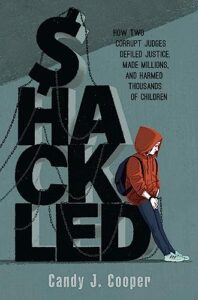
Shackled: A Tale of Wronged Kids, Rogue Judges, and a Town That Looked Away is a nonfiction book that describes systemic injustices in Wilkes-Barre, Pennsylvania’s juvenile court during the first decade of the 2000s. One of the most infamous individuals involved is youth court judge Mark Ciavarella, who was elected during the no-tolerance for youth crime moment in the late 1990s. Ciavarella quickly became known for his lack of mercy for even the youngest offenders and his unprofessional conduct in the courtroom, sometimes openly sentencing youth based on how his favorite sports teams had performed that week.
While Ciavarella was always incredibly unfair and intolerant of young people’s misbehavior, the bigger scandal began when he and the President Judge of the county invested in the construction of a brand-new, for-profit children’s detention center with two developers. In order to keep money flowing from the state to the jail, Ciavarella and Michael Conahan began sentencing young people to jail on the flimsiest of charges, like marking traffic signs up with Sharpie marker. For years, the four men lived lavish lifestyles off their crimes, until they were caught and tried with varying results.
The book weaves in the stories of more than a dozen young people who were defendants in Ciavarella’s courtroom, following their disproportionate stays in detention, exposure to worse crimes in lockup, financial struggles with fines and bonds, and challenges reintegrating into regular life after release. These stories show the real human impact of the outrageous criminal behavior of the judges. The penultimate chapter of the book depicts a youth courtroom in Newark, which is modeled after restorative justice and community healing—the manner in which all young people should be treated after arrest.
I plan to recommend the book to our English teachers for whole-class instruction. While there are mentions of suicide, sexual assault, and violence, there is no graphic content. For students in tenth grade and up, Shackled would be an eye-opening (or possibly, affirming) account of the youth criminal justice system and how it perpetuates social issues.
📖 Curricular Connection: Civics & Restorative Justice
This book serves as a powerful case study for High School Government or English classes:
-
Due Process: Discuss the constitutional right to counsel, which was routinely denied in Ciavarella’s court.
-
Profit in Prisons: Explore the ethical implications of “for-profit” detention centers and the “school-to-prison pipeline.”
-
Restorative vs. Punitive Justice: Compare the Luzerne County model with the Newark model mentioned in the book, focusing on how community healing differs from incarceratio