 Review By: Anonymous
Published: 2024
Genres: Memoir, Nonfiction, LGBTQ+ Studies, Cultural Criticism
Audience: Adult, Older Teens (Grade 12+)
Number of Stars: ★★★★☆ (4/5)
Goodreads Link: Pretty
Content Warnings: Gender dysphoria, racial discrimination, trauma, mental health struggles, and mature themes.
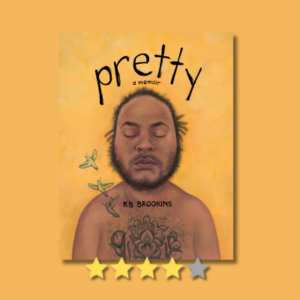
Publisher‘s Summary
By a prize-winning, young Black trans writer of outsized talent, a fierce and disciplined memoir about queerness, masculinity, and race.
Even as it shines light on the beauty and toxicity of Black masculinity from a transgender perspective—the tropes, the presumptions—Pretty is as much a powerful and tender love letter as it is a call for change.
“I should be able to define myself, but I am not. Not by any governmental or cultural body,” Brookins writes. “Every day, I negotiate the space between who I am, how I’m perceived, and what I need to unlearn. People have assumed things about me, and I can’t change that. Every day, I am assumed to be a Black American man, though my ID says ‘female,’ and my heart says neither of the sort. What does it mean – to be a girl-turned-man when you’re something else entirely?”
Informed by KB Brookins’s personal experiences growing up in Texas, those of other Black transgender masculine people, Black queer studies, and cultural criticism, Pretty is concerned with the marginalization suffered by a unique American constituency—whose condition is a world apart from that of cisgender, non-Black, and non-masculine people. Here is a memoir (a bildungsroman of sorts) about coming to terms with instantly and always being perceived as “other”
Review
Reading Pretty: A Memoir felt like sitting in a quiet office with a student who is finally ready to tell the truth about themselves, even if it is messy and painful. KB Brookins shares their life in a way that is both raw and powerful, moving through childhood, family dynamics, and the long process of understanding and accepting their gender identity. The memoir follows Brookins as they navigate a world that constantly tries to define them, and it is clear throughout that this is a long, ongoing journey toward selfhood. The writing does not shy away from the difficult parts, including trauma, mental health struggles, and the realities of discrimination, yet it also holds space for humor, resilience, and the small acts of care that make survival possible. It provided the perfect balance—a rare find in a memoir.
As a school counselor, the book resonated with the students I work with who feel unseen or misunderstood. Brookins’s honesty about the ways family, community, and society shape a person’s sense of worth makes this memoir a strong tool for empathy. I found myself thinking about how often students internalize the messages they receive about their bodies, identities, and value. The memoir is not an easy read, but it is important, and it offers a perspective that many students will recognize even if they have never had the words for it.
Because of the mature themes, I would recommend this primarily for older teens and adults. In a school setting, it connects well to social studies, health, and English lessons on identity, resilience, and narrative voice. A possible activity could be a reflective writing prompt where students explore how language shapes self-concept, or a discussion circle about the role of community in healing. It could also be a book study for a GSA club in a high school setting. I would recommend this book to counselors, teachers, and older teen readers who want a deeply honest memoir about race, gender, and survival.
🏳️⚧️ Intersectional Identity: Race and Gender
Brookins explores the specific intersection of being Black and Trans-masculine, illustrating how “otherness” is amplified by both racial and gendered expectations.
📊 Understanding the Landscape
For educators and GSA facilitators, it is helpful to look at the broader context of the challenges faced by the LGBTQ+ community, specifically within the Black community:
- Mental Health: According to The Trevor Project (2023), 54% of Black transgender and nonbinary youth seriously considered suicide in the past year.
- Discrimination: Black LGBTQ+ youth reported higher rates of being physically threatened or harmed (20%) compared to their white LGBTQ+ peers (12%) due to their sexual orientation or gender identity combined with racial bias.
- Identity Affirmation: Youth who have access to gender-affirming spaces report lower rates of suicide attempts by up to 50%.
🎒 GSA & Classroom Applications
- Reflective Writing: Use Brookins’s quote about “negotiating the space between who I am and how I’m perceived” as a prompt for students to discuss their own public vs. private selves.
- Health & Wellness: Discuss the impact of “unlearning” societal messages as a form of mental health maintenance and healing.
- Social Studies: Pair this memoir with lessons on Black Queer Studies to show the historical and contemporary contributions of Black trans people to civil rights movements.