 Review By: Anonymous
Published: 2023
Genres: Realistic Fiction, Contemporary YA, Indigenous Literature
Audience: Grades 9–12
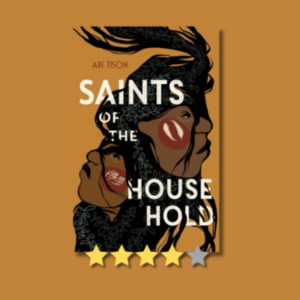
Number of Stars: ★★★★☆ (4/5)
Goodreads Link: Saints of the Household
Content Warnings: Physical abuse (domestic violence), violence, depression, PTSD, language, and mentions of sex.
Publisher’s Summary
Max and Jay have always depended on one another for survival. Growing up with a physically abusive father, the two Bribri American brothers learned that the only way to protect themselves and their mother was to keep their heads down.
But when they hear a classmate in trouble in the woods, instinct takes over. They intervene, beating the high school’s star soccer player to a pulp. This act of violence threatens the brothers’ dreams and their beliefs about who they are. As the novel unfolds in alternating points of view through vignettes and poems, Max and Jay grapple with the realization that they may be more like their father than they thought. They must reach back to their Bribri roots to find a way forward.
Review
Saints of the Household opens just after brothers Jay and Max encounter their cousin Nicole and her boyfriend Luca arguing in the woods. Upon seeing Luca manhandle Nicole, the brothers beat Luca up, breaking his nose. Jay and Max are no strangers to violence—for the better part of the last decade, their father has been physically abusing them and their mother. The two brothers have grown extremely close in their efforts to survive this turbulent household, and as part of their consequence for the fight, they undergo counseling together. However, Max begins to pull apart from Jay as he pursues a career in art and a new romance. Jay sinks deeper into a depression as he struggles to handle these changes and the end of his senior year.
There’s a lot to like about this book. It is extremely accessible for young, reluctant-leaning readers, written in verse and vignettes with the two brothers alternating perspectives. For a working-class population, the story of survival in difficult situations will definitely resonate. There is also significant content regarding the family’s Bribri (Indigenous Costa Rican) identity, which is celebrated when the boys’ grandfather comes to stay. The boys deal with mental health and the impact of trauma in very realistic ways, providing a solid model for how to handle these crises in real life. I will definitely recommend this book to students—most especially young men in grades 10 and up.
🧬 Trauma and the “Cycle of Violence”
A central tension in the novel is the brothers’ fear that they are genetically or behaviorally destined to become like their father. This is a common concern for survivors of domestic abuse.
🧠 PTSD and Hypervigilance
Growing up in an abusive home often leads to a state of constant “fight or flight,” which explains why the brothers reacted with such intensity in the woods.
🌿 Indigenous Bribri Identity
Ari Tison introduces readers to the Bribri people, an Indigenous group from the Talamanca region of Costa Rica. The arrival of the grandfather serves as a turning point, offering the boys a different definition of “manhood” and “strength” rooted in their heritage.
- Oral Tradition: The use of vignettes mirrors the storytelling traditions of their culture.
- Cultural Healing: The grandfather’s stories act as a form of medicine, helping the brothers reframe their trauma not just as a “brokenness,” but as a history they can rise above.
🎒 Classroom & Counseling Connections
- Counseling/SEL: Use the brothers’ joint counseling sessions to discuss healthy versus unhealthy conflict resolution.
- English/Literary Form: Analyze why Tison chose verse and vignettes for this story. How does the “fragmented” nature of the writing reflect a fragmented home life?
- Social Studies: Research the Bribri people and their matrilineal society, comparing it to the patriarchal violence depicted in the brothers’ home.
- Art Therapy: Inspired by Max, have students engage in a visual storytelling exercise to express an emotion they find difficult to put into words.