 Published: 2020
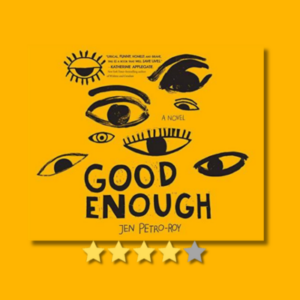
Author: Jen Petro-Roy
Genres: Middle Grade, Realistic Fiction, Mental Health
Audience: Grades 7–9
Number of Stars: ★★★★☆ (4/5)
Goodreads Link: Good Enough
Content Warnings: Detailed depiction of anorexia nervosa, inpatient treatment, and disordered eating triggers.
Publisher’s Summary
Before she had an eating disorder, twelve-year-old Riley was many things: an aspiring artist, a runner, a sister, and a friend. Now, from inside an inpatient treatment center for anorexia, it’s easy to forget all of that. Under the influence of her disorder, Riley alienated her friends, turned running into something harmful, and destroyed her family’s trust.
If Riley wants her life back, she has to fight herself to survive. As she attends therapy and starts to draw again, things begin to look up. But when her roommate begins breaking rules and triggering Riley’s old behaviors, she realizes that recovery is harder than she thought—especially with the looming pressure of her dieting mother and her gymnastics-star sister waiting for her back home.
Full Review
Good Enough tackles the sensitive topic of eating disorders with a deeply personal touch. Author Jen Petro-Roy is an eating disorder survivor and activist, and her authenticity shines through every page. The novel follows twelve-year-old Riley during her first two months in an inpatient program.
What makes this novel stand out is its compassionate and realistic portrayal of the recovery process. Riley is initially resistant, refusing to acknowledge she has a problem, but through therapy and group discussions, she begins to untangle her complicated relationship with food, her body, and her peers. The author successfully navigates a difficult subject without glamorizing the disorder, focusing instead on the setbacks and small victories of healing. Riley is a likable, believable character whose journey is supported by an excellent author’s note and a list of resources for readers seeking help.
🎒 Classroom & Counseling Connections
- Health (Mental Health Awareness): Use this book to discuss the difference between “disordered eating” and a clinical “eating disorder.”
- Counseling (Identity & Self-Worth): Riley feels she has to be “perfect” to be “good enough.” Facilitate a discussion on the “Perfectionism Trap” and how to build self-esteem that isn’t tied to physical appearance or achievement.
- ELA (Internal Conflict): Analyze the “voice” of the disorder in Riley’s head. How does the author distinguish between Riley’s true thoughts and the intrusive thoughts caused by her illness?
- Media Literacy: Discuss how “diet culture” and social media can act as triggers for adolescents. How does Riley’s mother’s focus on dieting impact Riley’s view of health?
- Creative Writing: Have students write a letter from “Healthy Riley” to “Struggling Riley,” focusing on the things she loves doing (like art) that have nothing to do with her weight.