 Published: 2012
Author: Stuart Gibbs
Genres: Middle Grade Mystery, Action & Adventure, Humor
Audience: Grades 5–8
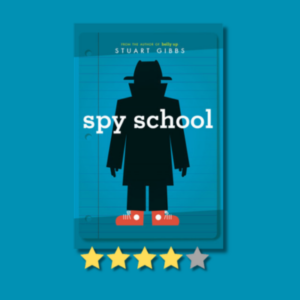
Number of Stars: ★★★★☆ (4/5)
Goodreads Link: Spy School
Content Warnings: Cartoonish violence, mild peril, and themes of espionage/deception.
Publisher’s Summary
Twelve-year-old Ben Ripley has a dream: join the CIA. But Ben isn’t exactly “super-spy” material. He’s awkward, accident-prone, and better at math than martial arts. So, he’s stunned when he’s recruited for a magnet school that is actually a front for a Junior CIA Academy.
Is he a secret genius? Not exactly. Ben quickly learns he was recruited as “bait” to smoke out a dangerous double agent. Thrust into a world of high-stakes missions, life-threatening mishaps, and unexpected friendships, Ben has to use his one true superpower—his math skills—to survive his first semester and prove that even an awkward middle schooler can become a halfway decent spy.
Full Review
Spy School is a fast-paced, laugh-out-loud adventure that perfectly captures the “awkward-teen-turned-hero” trope. Stuart Gibbs knows exactly how to hook a reader; the action kicks off on page one and never lets up. While the cover might not immediately scream “must-read” to every student, once they get through the first chapter, they’ll be hooked on Ben’s self-deprecating humor and the high-stakes world of the Academy.
The beauty of Ben Ripley is that he isn’t a traditional action hero. He succeeds because of his intelligence and his ability to see patterns where others see chaos. This makes him an incredibly relatable protagonist for students who might feel more comfortable with a calculator than a karate gi. It’s no wonder sixth graders are constantly clamoring for the next book in the series—the blend of mystery, suspense, and genuine comedy makes it a perfect middle-grade “page-turner.”
🏫 Academy Life: A Front for the CIA
The setting of the “Academy of Scholastic Distinction” provides a fun twist on the classic boarding school trope.
- The Cover Story: On the outside, it looks like a prestigious science magnet school.
- The Reality: The basement levels contain high-tech labs, combat training rooms, and top-secret intelligence archives.
- The Social Hierarchy: Ben has to navigate “legacy” spies (kids whose parents were agents) and the extremely capable Erica Hale, who serves as both a mentor and a reminder of how much Ben has to learn.
🎒 Classroom & Curricular Connections
-
Math (Pattern Recognition): Ben uses his math skills to solve puzzles.
-
Activity Idea: Provide students with a “frequency analysis” chart (which shows how often letters like ‘E’ appear in the English language). Have them use it to crack a simple substitution cipher.
-
-
STEAM (Coding & Algorithms): As the reviewer noted, the world of spies is the world of code.
-
Activity Idea: Use a beginner coding platform like Scratch or Python to have students create a “Secret Message Decoder.” How does a computer use an “If/Then” logic gate to translate a code?
-
-
ELA (Genre Study: Mystery vs. Thriller): > Activity Idea: Discuss the difference between a Mystery (solving a crime that already happened) and a Thriller (preventing a disaster in real-time). Which one is Spy School? Have students find evidence for both in the text.
-
Social Studies (The CIA and Intelligence): > Activity Idea: Research the real-world history of the CIA (Central Intelligence Agency). What are the actual requirements to become an agent? (Hint: It involves a lot more paperwork and degrees than the movies suggest!)