 Published: 2022
Series: N/A (Standalone)
Author: Anna Olswanger
Illustrator: Yevgenia Nayberg
Genres: Graphic Novel, Historical Fiction, Biography, Jewish History
Audience (Grade Levels): Middle Grade and Teen (Grades 5-12)
Number of Stars: ⭐⭐⭐⭐ (4/5 Stars)
Goodreads Link: A Visit to Moscow
Triggers: Religious Persecution, Antisemitism
Review By: Lindsay Cesari
Publisher’s Summary:
Powerful and moving, A Visit to Moscow is inspired by the true experience of an American rabbi who travels to the Soviet Union in the 1960s, a dangerous time of uncertainty and fear for Jews in the nation.
“Stirring and tragic and hopeful all at the same time. Extraordinary illustrations, compelling words, and a heartbreaking story make it a book to cherish.”
—Karen Cushman, Newbery Award-winning author
“This beautiful, haunting story evokes the tragedy and triumph of Soviet Jewry in a way that few books have managed to do.”
—Yossi Klein Halevi, New York Times bestselling author
“A Visit to Moscow gives the true feeling of the tragedy of Russian Jewry. For seventy years we were isolated, not getting the fresh air of Yiddishkeit–we almost starved. And still, Soviet Jewry survived against all odds.”
—Yosef Mendelevitch, Prisoner of Zion in the former Soviet Union
In 1965, an American rabbi travels to the Soviet Union to investigate reports of persecution of the Jewish community. Moscow welcomes him as a guest–but provides a strict schedule he and the rest of his group must follow. One afternoon, the rabbi slips away. With an address in hand and almost no knowledge of the Russian language, he embarks on a secret journey that will change his life forever. Inspired by the true experience of Rabbi Rafael Grossman, A Visit to Moscow captures the formidable perseverance and strength of the Jewish people during the “Let My People Go” movement, a modern exodus that is often overlooked.
Review:
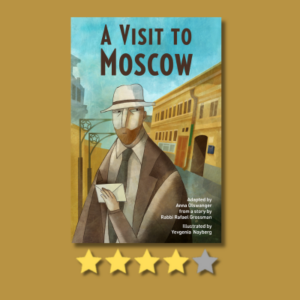
I love it when a title introduces me to history I didn’t know anything about. In this case, it’s the “Let My People Go” movement and the persecution of Jews in the Soviet Union during the 1960s. This particular graphic novel is an interesting intersection of nonfiction and historical fiction – the story from the book was always portrayed as factual when discussed in public settings in front of an audience, but the main character, Rabbi Rafael Grossman, died before the author had the opportunity to verify it. The title successfully creates suspense and a feeling of danger as the Rabbi travels to the Soviet Union and begins to unravel a family secret, with the illustration using color and form to accurately reflect the emotions someone might feel if they’re worried about arrest by the KGB. Because the book is on the shorter side but also deals with important history, I think it can find a home on upper elementary through high school library shelves.
Classroom & Curricular Connections:
- World History & Cold War Studies: Use this graphic novel to introduce the domestic realities of life under the Soviet regime, specifically focusing on state-enforced atheism and the systematic repression of minority groups. Students can research the broader historical context of the “Let My People Go” movement and the global efforts to aid Soviet Jewry during the mid-to-late 20th century.
- Art & Visual Literacy: Analyze the illustrator’s specific use of color palettes and abstract forms. Have students evaluate how the visual elements shift to denote fear, secrecy, and the lingering threat of surveillance or arrest by the KGB, demonstrating how graphic imagery handles complex psychological themes.
- English Language Arts (Evaluating Historical Authenticity): Address the book’s unique blending of historical fiction, biography, and oral tradition. Guide a class discussion or research assignment centered on the challenges of historical verification, exploring how a writer reconstructs an important narrative when a primary source passes away before formal verification can happen.
- Classroom Extension Activity (Primary Source Pairings): Pair the reading of this short graphic novel with actual declassified Cold War documents, newspaper archives detailing Soviet refuseniks, or recorded testimonies from the American Soviet Jewry movement to contrast the narrative’s intimate focus with global political timelines.