 Published: 2022
Series: N/A
Author: Christina Diaz Gonzalez
Illustrator: Gabriela Epstein
Genres: Graphic Novels, Middle Grade, Realistic Fiction, Fiction, Friendship, Comics, Contemporary, Young Adult, Latinx, Children’s Fiction
Audience (Grade Levels): Grades 5-8
Number of Stars: ⭐⭐⭐⭐⭐
Goodreads Link: Invisible
Triggers / Content Warnings: Only possible concern I can see is perhaps homelessness could be a trigger for some students. It does play a major part of the plot.
Review By: Jenna Ballard
Publisher’s Summary:
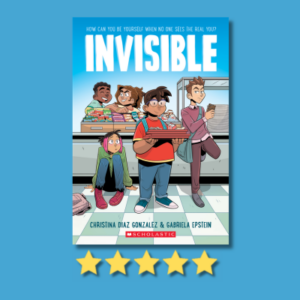
For fans of Twins and Allergic, a must-have graphic novel about five very different students who are forced together by their school to complete community service… and may just have more in common than they thought.
How can you be yourself when no one sees the real you? Five students meet in the school cafeteria when they’re forced to complete their school community service hours.
There’s Jorge: the brain
Sara: the loner
Dayara: the tough kid
Nico: the rich kid
And Miguel: the athlete
They immediately know that they have nothing in common with each other… even though their school administration has decided that they all belong together. None of the kids wants to be there, and each has their own issues they’re dealing with in their life outside of school. But when they encounter someone who truly needs their help, they might just be able to come together to work as a team—and help their community—after all. Christina Diaz Gonzalez, award-winning author of The Red Umbrella, and Gaby Epstein, illustrator of the Baby-Sitters Club graphic novel adaptations, have created a vibrant and relatable graphic novel about unexpected friendships and being seen for who you really are.
Review:
This will quickly be snatched up and enjoyed by fans of Jerry Craft, Raina Telgemeier, and the like. The main narrative is told from different points of view of all 5 kids mentioned in the summary. They are all from a Latinx background, but their varied experiences, personalities, and interests show the incredible diversity within the Latinx community (which some people view as a monolith). I loved how so much of the dialogue is bilingual, reflecting the varying levels of English/Spanish speaking of each character. The art conveys this with double speech bubbles for many of the characters, one in the Spanish and then one with the English translation, as seen in the panel to the right.
I only wish we got to learn more about each main character. Because of the shared POV, the reader gets pretty brief glimpses into the life of each one. I wanted to see more! I can see this easily turning into a series where perhaps future books each focus on one of the kids so we can delve deeper into their own challenges, home life, and so on. But overall I enjoyed the story and very much appreciate the message it communicates to the reader. I’ll be sharing this one with my students.
Classroom & Curricular Connections:
- ELA (English Language Arts): A brilliant mentor text for examining multi-perspective narratives, analyzing how authors construct individual character voices, and studying the interplay between dialogue and translated subtext.
- Social Studies & Civics: Integrates seamlessly into units exploring modern immigration, community service, social stratification, and human geography, prompting students to evaluate how institutional systems treat minority demographics.
- SEL (Social-Emotional Learning): Connects deeply to themes of breaking down peer stereotypes, building structural empathy, addressing the emotional complexities of homelessness, and discovering individual agency through teamwork.
- Extension Activity / Library Application: Ideal for an interactive school library book club or classroom extension activity. Teachers can pair this book with read-alikes like New Kid by Jerry Craft, Swim Team by Johnnie Christmas, or Frizzy by Claribel A. Ortega. Librarians can coordinate a “Bilingual Comic Panel Workshop” where students draft a brief 3-panel comic using the book’s signature “double speech bubble” format to showcase a conversation where two characters translate or navigate a communication barrier.
- Diversity & Representation: The book models outstanding diversity, equity, and inclusion under an “ownvoices” banner by directly challenging the harmful notion that the Latinx community is a cultural monolith. By displaying a rich spectrum of language fluencies, socioeconomic backgrounds, physical design choices, and unique personal histories, the narrative highlights intersectional identity and equity in a way that respects and validates the lived experiences of marginalized youth.
Read-alikes:
- New Kid by Jerry Craft
- Swim Team by Johnnie Christmas
- Frizzy by Claribel A. Ortega