 Published: 2021
Series: Big Panda & Tiny Dragon
Author & Illustrator: James Norbury
Genres: Fiction, Philosophy, Graphic Novels, Self Help, Poetry, Art, Picture Books, Fantasy, Childrens, Spirituality
Audience (Grade Levels): All Ages; PreK-12th Grade
Number of Stars: 5-Stars
Goodreads Link: Big Panda and Tiny Dragon
Triggers: None
Review By: Gretchen Fronk
Publisher’s Summary:
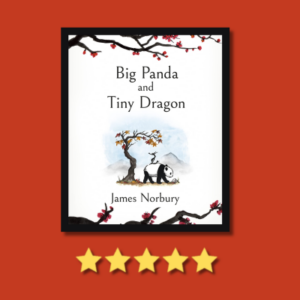
A thought-provoking journey of companionship, courage, tenderness, and tea. Big Panda and Tiny Dragon embark on a journey through the seasons of the year together. They get lost, as many of us do. But while lost, they discover many beautiful sights they’d never have found had they gone the right way. Told through a series of beautiful drawings and quiet, sometimes silly, conversations, the panda and the dragon explore the thoughts and emotions, hardships and happiness that connect us all. In nature, they learn how to live in the moment, how to be at peace with uncertainty, and how to find the strength to overcome life’s obstacles together.
Inspired by Buddhist philosophy and spirituality, British author and artist James Norbury created the adventures of Big Panda and Tiny Dragon to share ideas that have helped him through difficult times. The book’s series of vignettes can be read cover to cover or dipped into whenever inspiration is needed. James hopes the book’s words and images will inspire others to pause, enjoy the stillness, and look at life in a positive new way. Join Big Panda & Tiny Dragon on their travels. They often get lost and make a lot of mistakes. But therein lies the beauty of life.
Review: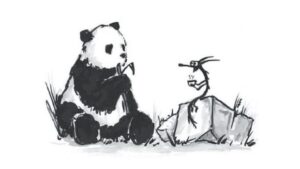
An uplifting, soothing, sweet story of two friends that are as opposite in personality, desire, and thought as can be imagined. Big Panda and Tiny Dragon’s adventure of getting lost mimics what many humans find themselves as in life. Life can be extremely tough and blinding, as people get lost in their own darknesses and negative experiences. The sweet and developing relationship between Big Panda and Tiny Dragon parallels what humans call life experiences. Both characters learn from each other as they get lost on their journey, providing Norbury with multiple times to pause and provide life lessons/quotes to the reader. These lessons/quotes make fantastic material for teaching. I believe teaching this book would be best at the middle or high school level, but the book is meant for all ages. In what is becoming a more and more volatile existence, this book teaches people to slow down, accept who they are, and recognize that no matter how bleak life might be, there is always something good to be found.
Self-help isn’t really the right category for this. This book is more of a way for you to slow down and create a sense of calm. It’s divided into five sections: Spring, Summer, Autumn, Winter, and back to Spring again. The Big Panda and the Tiny Dragon travel around together and say poignant things, sort of Pooh and Piglet style, but with even more Buddhism. Example: “That tree has been through some rough times,” said Tiny Dragon. “Yes, ” said Big Panda, “but it’s still here, and it has gained strength and beauty.” Or, “Sometimes it’s good to head out, with no idea where you are going.” “This garden is beautiful,” said Tiny Dragon. Big Panda nodded. “And we only found it because we went the wrong way so many times.” You get the idea.
It sounds kind of silly now when I am writing this review, but I really did enjoy this book. I might have rolled my eyes at it a big more if it didn’t have such lovely illustrations (also by James Norbury). It provides sound-bite wisdom, to be sure, but it does it with sincerity and without the smugness of a self-help guru trying to tell you what to do with your life.
This is a lovely gift book for someone in your life who needs to slow down a bit. As Big Panda says, “Time doing nothing is never wasted.”
Classroom & Curricular Connections:
- Social-Emotional Learning (Mindfulness, Acceptance, and Overcoming Hardships): This text is a perfect vehicle for teaching students how to slow down, accept themselves, find peace in uncertainty, and recognize that getting lost is a natural part of the human journey.
- Art / Visual Literacy (Illustrative Storytelling and Mood-Building): Students can analyze how Norbury’s simple yet expressive illustrations work hand-in-hand with the text to establish a soothing atmosphere of calm and stillness.
- Philosophy / Social Studies (Introduction to Eastern Thought and Buddhism): The dialogues provide a highly accessible, non-preachy introduction to Buddhist concepts, letting educators explore mindfulness philosophies and Eastern perspectives on life, nature, and resilience.
- “Beautiful Mistakes” Art Workshop: Inspired by the book’s message that beautiful sights are found by taking the wrong way, host a creative session in the school library. Have students start a drawing, intentionally make a “mistake” or paint splatter, and then work to transform that mistake into a beautiful, unexpected piece of landscape art.
- “Daily Pause” Sound-Bite Wisdom Journaling: Following the reviewer’s note that these quotes are great for teaching, have students select their favorite vignette or quote from the book. Have them write a brief, personal reflection on how that quiet lesson applies to their own daily lives and stressors.
Diversity & Representation:
Big Panda and Tiny Dragon supports diverse and inclusive collections by centering Buddhist spirituality and philosophy in an incredibly approachable way. By translating Eastern concepts of mindfulness, meditation, and quiet acceptance into a universal narrative of friendship, the book provides a meaningful, non-Western model of self-care and mental well-being for students of all backgrounds.
Readalikes
- The Boy, the Mole, the Fox and the Horse by Charlie Mackesy
- The Tao of Pooh by Benjamin Hoff
- Winnie-the-Pooh by A.A. Milne