 Published: 2023
Series: N/A (Standalone)
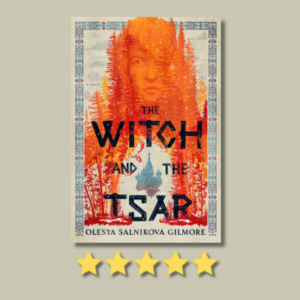
Author: Olesya Salnikova Gilmore
Illustrator: N/A
Genres: Historical Fiction, Fantasy, Magical Realism
Audience (Grade Levels): 9-12
Number of Stars: ⭐⭐⭐⭐⭐ (5/5 Stars)
Goodreads Link: The Witch and the Tsar
Triggers: Violence, Mental Health
Review By: Gina Iorio
Publisher’s Summary:
In this stunning debut novel, the maligned and immortal witch of legend known as Baba Yaga will risk all to save her country and her people from Tsar Ivan the Terrible—and the dangerous gods who seek to drive the twisted hearts of men. As a half-goddess possessing magic, Yaga is used to living on her own, her prior entanglements with mortals having led to heartbreak. She mostly keeps to her hut in the woods, where those in need of healing seek her out, even as they spread rumors about her supposed cruelty and wicked spells. But when her old friend Anastasia—now the wife of the tsar, and suffering from a mysterious illness—arrives in her forest desperate for her protection, Yaga realizes the fate of all of Russia is tied to Anastasia’s. Yaga must step out of the shadows to protect the land she loves. As she travels to Moscow, Yaga witnesses a sixteenth century Russia on the brink of chaos. Tsar Ivan—soon to become Ivan the Terrible—grows more volatile and tyrannical by the day, and Yaga believes the tsaritsa is being poisoned by an unknown enemy. But what Yaga cannot know is that Ivan is being manipulated by powers far older and more fearsome than anyone can imagine.
Olesya Salnikova Gilmore weaves a rich tapestry of mythology and Russian history, reclaiming and reinventing the infamous Baba Yaga, and bringing to life a vibrant and tumultuous Russia, where old gods and new tyrants vie for power. This fierce and compelling novel draws from the timeless lore to create a heroine for the modern day, fighting to save her country and those she loves from oppression while also finding her true purpose as a goddess, a witch, and a woman.
Review:
The Witch and the Tsar is a captivating tale that weaves together elements of folklore, magic, and political intrigue. Set in a realm reminiscent of medieval Russia, the story follows the unlikely alliance between a powerful witch and Ivan the Terrible as they navigate a world threatened by dark forces and internal strife. The writing immediately drew me in and the author’s ability to create an interesting world with richly developed characters had me hooked. The witch, with her mysterious past, kept me engaged from start to finish. Ivan is a tyrant, and some of his actions may be difficult for some readers. As a side note, I loved the setting of this book. Usually, books written about Russia take place at the end of the Romanov dynasty. Personally, I feel publishers are missing out on exploring Russia’s past. If anyone thought the Tudor’s were scandalous, they haven’t read about the tsars and tsaritsas of Russia. The Witch and the Tsar is a spellbinding read that will appeal to fans of fantasy and historical fiction alike.
Classroom & Curricular Connections:
- World History (16th-Century Russia): Use this novel to introduce students to the unification of Russia and the early tsardom under Ivan IV (Ivan the Terrible). Have students research the transition from medieval principalities to an autocratic empire, exploring how the true historical actions of Ivan’s secret police (oprichniki) compare to the tyrannical choices highlighted in the narrative.
- English Language Arts / Comparative Mythology: Contrast Gilmore’s reimagined, empathetic portrayal of Baba Yaga with the traditional Slavic folklore archetype of the grotesque, child-eating crone in chicken-legged huts. Students can write an analytical essay on how modern authors reclaim historically vilified female characters from folklore to explore themes of agency and isolation.
- Social Studies (Political Intrigue & Scandal): Address the reviewer’s point about international royal scandals. Have students compare the political structure, dynastic schemes, and court executions of the Russian Tsardom with the Tudor dynasty in England, mapping out how absolute rulers consolidated power using terror.
- Creative Writing Extension Activity: Have students pick a misunderstood figure from mythology or folklore (e.g., Medusa, Grendel’s mother, or the Banshee) and write a short story scene that humanizes them, anchoring their actions in a real historical setting or political conflict.