 Published: 2022
Series: Sworn Soldier #1
Author: T. Kingfisher
Illustrator: N/A
Genres: Horror, Fantasy, Gothic Fiction, Mystery, Retellings, Novella, Historical Fiction
Audience (Grade Levels): Grades 9-12 (High School / Adult Crossover)
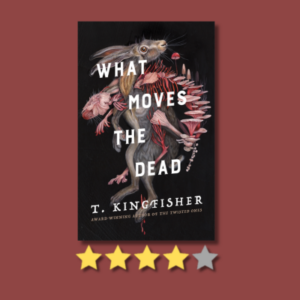
Number of Stars: ⭐⭐⭐⭐ (4/5 Stars)
Goodreads Link: What Moves the Dead
Triggers: Fungal body horror, terminal illness, animal possession/death, medical themes
Review By: Evan Waugh
Publisher’s Summary:
When Alex Easton, a retired soldier, receives word that their childhood friend Madeline Usher is dying, they race to the ancestral home of the Ushers in the remote countryside of Ruravia. What they find there is a nightmare of fungal growths and possessed wildlife, surrounding a dark, pulsing lake. Madeline sleepwalks and speaks in strange voices at night, and her brother Roderick is consumed with a mysterious malady of the nerves. Aided by a redoubtable British mycologist and a baffled American doctor, Alex must unravel the secret of the House of Usher before it consumes them all.
Review:
In T. Kingfisher’s gothic horror novel, What Moves the Dead, Alex Easton is summoned to the House of Usher by their childhood friend, Madeline Usher. What Easton finds there is a landscape riddled with strange fungi, which appear to have the wildlife acting strangely. When Alex sees Madeline Usher, they quickly realize that Madeline’s strange affliction might be related to the fungi beyond the walls of the manor…
T. Kingfisher’s novel – a retelling of Poe’s “The Fall of the House of Usher” – is a great example of what a contemporary gothic horror story could be, with a quick paced, intriguing plot line. While it took me a few chapters to get into the story, I was motivated to continue reading by the secrets of the Usher house itself, as well as the mysterious illness that plagues Madeline Usher, all of which comes to head at the climax of the story. Clocking in at only 170+ pages, What Moves the Dead does not have a lot of real estate to work with, so the suspense and body horror that Kingfisher packs into this novel is worthy of any full-length read. Furthermore, Kingfisher is able to execute all of these elements of horror and suspense without any graphic content, making this a book that could be used in the classroom.
While my favorite Poe retelling remains Bradbury’s “Usher II,” What Moves the Dead is a chilling, compact read.
Classroom & Curricular Connections:
- English Language Arts (Comparative Literature): Pair this novella with Edgar Allan Poe’s classic short story “The Fall of the House of Usher.” Have students conduct a comparative analysis tracking how Kingfisher updates the classic Gothic tropes, expands on the environmental decay through mycology, and shifts the narrative point of view. For further comparison, introduce Ray Bradbury’s sci-fi retelling “Usher II” from The Martian Chronicles as referenced by the reviewer.
- Science Integration (Mycology & Ecology): Partner with biology or environmental science concepts to look at the real-world science behind fungi. Students can research real instances of mind-controlling or behavior-altering fungi found in nature (such as Ophiocordyceps unilateralis or zombie-ant fungus) and evaluate how Kingfisher uses true biological traits to anchor speculative body horror.
- Social Studies & Linguistics (Gender and Culture): Explore the world-building of Kingfisher’s fictional country of Ruravia. Have students analyze the linguistic world-building of the novel, particularly how the author introduces unique gender-neutral pronouns and military subcultures, opening up a broader discussion on the evolution of pronouns, identity, and respect across different societies.
- Creative Writing Extension Activity: Because this book delivers intense atmospheric dread without relying on overly graphic violence, challenge students to write a short horror vignette. Task them with creating suspense using an inanimate object, plant life, or environmental element (like weather or mold) as the primary source of tension.