 Published: 2020
Series: N/A
Author: Jessica Roux
Illustrator: Jessica Roux
Genres: Nonfiction, History, Nature, Art, Reference, Gardening
Audience: Grades 6–12, Adult
Number of Stars: ⭐⭐⭐⭐⭐
Goodreads Link: Floriography: An Illustrated Guide to the Victorian Language of Flowers
Triggers: None
Review By: Gina Iorio
Publisher’s Summary:
A charming, gorgeously illustrated botanical encyclopedia for your favorite romantic, local witch, bride-to-be, or green-thumbed friend.
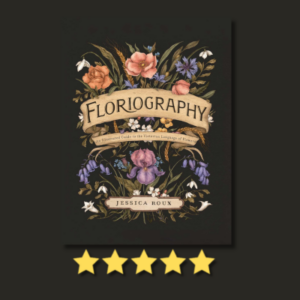
Floriography is a full-color guide to the historical uses and secret meanings behind an impressive array of flowers and herbs. The book explores the coded significances associated with various blooms, from flowers for a lover to flowers for an enemy.
The language of flowers was historically used as a means of secret communication. It soared in popularity during the 19th century, especially in Victorian England and the U.S., when proper etiquette discouraged open displays of emotion. Mysterious and playful, the language of flowers has roots in everything from the characteristics of the plant to its presence in folklore and history. Researched and illustrated by popular artist Jessica Roux, this book makes a stunning display piece, conversation-starter, or thoughtful gift.
Review:

Floriography explores the history and symbolism of flowers from a Victorian perspective. Many do not know, but during the Victorian era, if you were courting a girl, or sending flowers to a friend, one had to be mindful of which flowers to select. For instance, you didn’t want to send Columbines to a girl you love because the flower represents foolishness. As someone who loves reading about the Victorian era I enjoyed this novel and its beautiful illustrations. However, casual readers wanting to learn more about the time period would enjoy this book as well.
The book is divided into sections based on themes and meanings, making it easy for readers to navigate and explore the symbolic language of flowers at their own pace. This thoughtful arrangement enhances the book’s accessibility and usefulness as a reference. One feature is the Floriography is its well-organized structure. Each flower has its meaning, origins and what other flowers it can be paired with to bring additional meaning to your bouquet. The illustrations are breathtaking and bring each flower to life. Each illustration stands on its own and enhances the text. There is a vintage vibe from each flower, which I love. While Floriography is primarily focused on the language of flowers, it also serves as a celebration of nature’s diversity and beauty.
If you love art, nature or history, this book is a great addition to anyone’s shelf. I loved it and will purchase other books by this author.
Classroom & Curricular Connections:
- Art / History / ELA:
- Students can explore Victorian culture, symbolism, and visual literacy while examining how flowers were used as a form of communication. The book also supports research and informational reading skills.
- Extension Activity / Library Application:
- Invite students to create their own “language of flowers” bouquet, design illustrated flower guides, or research the symbolism of plants from different cultures. This title would also make an excellent resource for art classes, makerspaces, and themed library displays.
- Diversity & Representation Note:
- The book introduces readers to historical customs and cultural practices while encouraging appreciation for the intersection of art, nature, history, and communication.
Readalikes:
- The Language of Flowers by Vanessa Diffenbaugh
- The Complete Language of Flowers by S. Theresa Dietz
- Botanical Curses and Poisons by Fez Inkwright
- The Hidden Language of Flowers by Samantha Gray