 Published: 2023
Series: Nat Enough, Book #4
Author: Maria Scrivan
Illustrator: Maria Scrivan
Genres: Graphic Novels, Middle Grade, Fiction, Childrens, Realistic Fiction, Friendship, Juvenile, Comics, Graphic Novels Comics, Young Adult
Audience (Grade Levels): Grades 3-7
Number of Stars: ⭐⭐⭐⭐⭐
Goodreads Link: Nat for Nothing
Triggers: Feelings of peer betrayal, social exclusion, anxiety about fitting in, and friend group jealousy
Review By: Diana Cashman
Publisher’s Summary:
A companion to the New York Times bestselling series that began with Nat Enough! It’s a best friend battle!
Natalie is having a rough start to the school year. Each student has been asked to join an extracurricular activity, and Nat’s two best friends have no trouble finding activities that interest them. Flo tries her hand at puppetry, and Zoe makes the volleyball team… with Nat’s ex-BFF, Lily! So now Zoe and Lily are always together, and Nat is over it! Nat’s feeling betrayed, and she still hasn’t found a club to join. But when Nat meets a new student who’s having the same difficulty choosing a club, they decide to create one together. Could this be the solution to her problems?
Review:
I’ve read all of the books in the series, and for someone who isn’t a huge fan of graphic novels, I have truly enjoyed this series. I like the pictures, the characters, and the fact that the story is realistic. Many of my students this year strongly prefer graphic novels to anything else, and I was able to get them to read more frequently by promoting this series which was very helpful. This book (book #4) was definitely not my favorite and I felt that Nat was a little whiny throughout the novel and did not do a very good job advocating for herself which would be a better example for kids who do read this and love it. Nat’s cat and dog that show up in the beginning of each chapter, and sometimes throughout are definitely my favorite part. They are sarcastic, funny, and play into dog and cat stereotypes.
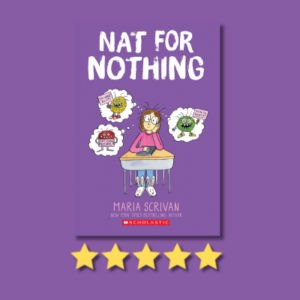
Scrivan presents a highly approachable writing style and structural organization that serves as an amazing bridge for reluctant or visually oriented readers. Though the main narrative pacing slows slightly due to Natalie’s recurring patterns of self-pity and lack of self-advocacy—which can occasionally frustrate mature readers—the emotional baseline remains completely realistic for a junior high setting. The illustrations are a true highlight; they are incredibly bright, expressive, and dynamically framed to maximize comic timing. The structural inclusion of short comic strips featuring her pets at the beginning of each chapter is a creative choice that infuses the book with a playful, lighthearted mood. This brilliant artistic style allows the physical comedy and situational awkwardness to jump off the page. The jacket art is remarkably vibrant and eye-catching, acting as an exceptional visual hook to immediately attract middle-grade students.
I rate this installment a full 5 stars, giving it top marks for its artistic execution, immense student appeal, and overall representation of typical adolescent struggles. It is an excellent recommendation for elementary and middle school librarians, reading intervention specialists, and classroom teachers who need high-interest hooks for independent reading programs. Ultimately, this title carries profound overall value for building reading stamina and extending contemporary graphic collections in school and public libraries.
Classroom & Curricular Connections:
- ELA / Visual Literacy: An outstanding mentor text for analyzing comic structures, investigating panel layouts, and demonstrating how a graphic novel uses visual cues to depict inner emotional monologues.
- Social-Emotional Learning (SEL): Connects perfectly to guidance and classroom units surrounding conflict resolution, overcoming jealousy, building new peer relationships, and developing personal coping strategies when friend groups shift.
- Extension Activity / Library Application: This graphic novel is an ideal selection for upper elementary or middle school literature circles, independent reading challenges, or library book clubs. Students can design an official promotional flyer or visual shield for a completely original extracurricular club they would personally create to solve a community or school-wide problem.
- Diversity & Representation: This title supports equity, diversity, and inclusion by mirroring authentic, everyday adolescent anxieties across varied social dynamics. It provides meaningful representation of the non-linear path of social growth, ensuring students see their own awkward transitions and identity searches validated on the page.
Readalikes:
- Invisible Emmie by Terri Libenson
- Sunny Side Up by Jennifer L. Holm
- Guts by Raina Telgemeier