 Published: 2023
Series: Guardians of Dawn, Book #1
Author: S. Jae-Jones
Illustrator: N/A
Genres: Fantasy, Young Adult, Romance, Young Adult Fantasy, Magic, Mythology, Fiction, Retellings, High Fantasy
Audience (Grade Levels): Grades 9-10, 11-12
Number of Stars: ⭐⭐⭐⭐⭐
Goodreads Link: Guardians of Dawn: Zhara
Triggers / Content Warnings: Abuse/cruelty from a stepmother, a corruption plague, and battling monsters/demons.
Review By: Gina Iorio
Publisher’s Summary:
Sailor Moon meets Cinder in Guardians of Dawn: Zhara, the start of a new, richly imagined fantasy series from S. Jae-Jones, the New York Times bestselling author of Wintersong. Magic flickers. Love flames. Chaos reigns. Magic is forbidden throughout the Morning Realms. Magicians are called an abomination, and blamed for the plague of monsters that razed the land twenty years before.
Jin Zhara already had enough to worry about―appeasing her stepmother’s cruel whims, looking after her blind younger sister, and keeping her own magical gifts under control―without having to deal with rumors of monsters re-emerging in the marsh. But when a chance encounter with an easily flustered young man named Han brings her into contact with a secret magical liberation organization called the Guardians of Dawn, Zhara realizes there may be more to these rumors than she thought. A mysterious plague is corrupting the magicians of Zanhei and transforming them into monsters, and the Guardians of Dawn believe a demon is responsible. In order to restore harmony and bring peace to the world, Zhara must discover the elemental warrior within, lest the balance between order and chaos is lost forever.
Review:
Guardians of Dawn: Zhara by S. Jae-Jones is an expansive high fantasy novel written for young adults in grades 9–12. I enjoyed Guardians of the Dawn. It was a good fantasy novel with unique characters. However, sometimes the pacing was off and the story dragged on. A good editor could have moved the story along. The world building is impressive and better than it was in Fourth Wing. The author crafts a unique and intricate universe, complete with its own history, cultures, and magical systems. However, sometimes the complexity of the world building can be initially overwhelming. Additionally, those looking for a quick, straightforward read might find the detailed narrative a bit demanding.
Without a doubt, my favorite character was Xu because they were witty and I was laughing as I read some of their lines. The main character, Zhara, reminds me of Cinderella with a wicked stepmother. As the story unfolds, readers witness her growth as a character. The romance was a slow burn and did not enhance the story. The publisher compared this novel to Sailor Moon, but I’m not sure why. I didn’t make the connection, so maybe it was just a market strategy. Overall, I enjoyed Guardians of the Dawn, but I am not invested enough to read the second book.
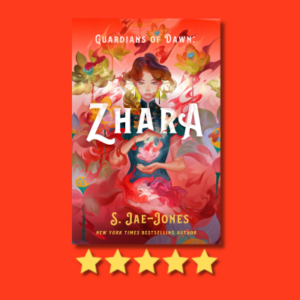
Though it presents a slower narrative pace, this book holds distinct value for school libraries and educators seeking to enrich their high school fantasy collections. The cover art is extraordinarily vibrant and effectively engineered to pull in the target YA demographic, signaling a lush, Eastern-mythology-inspired magical epic. While the romance lacks a compelling spark, the overarching themes of individual liberation and standing up against institutional oppression are written with great passion. It is an excellent choice for independent reading programs or school book clubs catering to seasoned fantasy readers who love dense, sprawling universes over fast, plot-driven books.
Classroom & Curricular Connections:
- ELA (English Language Arts): Ideal for comparative literature studies. Students can map the narrative parallels between Zhara’s domestic oppression and the traditional Cinderella archetype. It can also be utilized to study world-building techniques, analyzing how historical lore and structural rules are introduced into speculative prose.
- Social Studies / Mythology: Connects beautifully to Asian-inspired folklore, global mythology, and the sociological study of how societies construct scapegoats during times of disease or panic (such as the Morning Realms blaming magicians for the historical monster plague).
- SEL (Social-Emotional Learning): Opens up vital pathways to discuss resilience in the face of familial cruelty, learning to accept one’s hidden gifts, and the heavy burden of acting as a caretaker for a sibling.
- Extension Activity / Library Application: Perfect for high school literature circles or independent reading extensions. Instructors can host a “World-Building Blueprint” activity. Since the universe in this title is incredibly dense, have students generate a visual map or an encyclopedia entry tracking one of the cultures, magic branches, or historical conflicts within the Morning Realms.
- Diversity & Representation: The book shines in its meaningful representation by pulling away from Eurocentric high fantasy traditions. It constructs a deeply original world steeped in Asian-inspired mythology and featuring a diverse cast. Additionally, the inclusion of a blind younger sister provides a rare space for exploring non-tokenistic disability advocacy and protective family dynamics within a fantasy landscape.