 Published: 2020
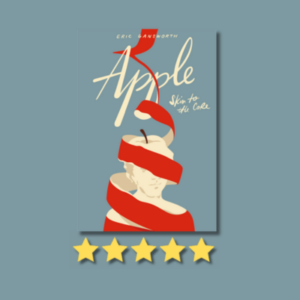
Author: Eric Gansworth
Genres: Poetry, Memoir, Nonfiction, Indigenous, Biography, Native American, LGBT, Novel In Verse, Biography Memoir
Audience (Grade Levels): Middle School, High School; Grades 7–12
Number of Stars: 5-Stars
Goodreads Link: Apple (Skin to the Core)
Triggers: Systemic racism, physical and emotional abuse in government boarding schools, poverty, racial slurs, identity struggles
Review By: Mary Alice Brennan-Steere
Publisher’s Summary
The term “Apple” is a slur in Native communities across the country. It’s for someone supposedly “red on the outside, white on the inside.” Eric Gansworth is telling his story in Apple (Skin to the Core). The story of his family, of Onondaga among Tuscaroras, of Native folks everywhere. From the horrible legacy of the government boarding schools, to a boy watching his siblings leave and return and leave again, to a young man fighting to be an artist who balances multiple worlds. Eric shatters that slur and reclaims it in verse and prose and imagery that truly lives up to the word heartbreaking.
Review
In verse, Gansworth chronicles his life on the Tuscarora Nation Reservation in Niagara County, NY during the 1970’s-80’s. He recounts the experience of family members in the early 20th century who were sent to government boarding schools. The schools’ aim was to “Americanize” the students by erasing their indigenous language, history, and culture. Gansworth aptly describes the tension he experienced trying to assimilate with non Native American culture while honoring his Tuscarora/Onondaga heritage, amidst the challenge of living in high poverty. It’s a poignant window into contemporary Native American life, its associated stereotypes, and the author’s search for self. Gansworth uses the Beatles’ “White Album” songs to organize his life story, and some of those references might fly above the heads of those who are not familiar with their music. I found this novel to be a rare and powerful perspective of modern indigenous life and would highly recommended it for adults as well as older teens who enjoy memoirs.
This novel in verse is an exceptional masterpiece that balances raw, painful historical truths with the intimate, everyday moments of growing up. Gansworth’s writing is incredibly evocative, using both prose and poetry alongside his own original illustrations and family photographs to build a deeply personal archive of his life and heritage. By restructuring his memories around the tracklist of the Beatles’ “White Album,” he brilliantly captures the clash of pop-cultural integration and Indigenous preservation, even if some of the musical nuances are lost on younger readers who aren’t familiar with classic rock. The pacing is deliberate and carries a heavy emotional resonance, pulling no punches when describing the generational trauma left behind by government-mandated boarding schools. This book is a vital, unforgettable read for secondary students and educators alike. It challenges readers to think critically about identity, systemic erasure, and the words we use to define ourselves and others.
Classroom & Curricular Connections
- Social Studies / US History (Indigenous History & Policy): This memoir is an invaluable tool for exploring the devastating history of forced assimilation policies, specifically the legacy of American Indian boarding schools in the 20th century. It provides a direct human connection to historical textbook units.
- English Language Arts (Novels in Verse & Structure): Educators can use this book to study non-traditional memoir formats, analyzing how Gansworth weaves poetry, prose, family photos, and pop-culture motifs (such as the Beatles) to build a cohesive, multi-layered narrative.
- Social-Emotional Learning (Identity & Resilience): The book centers on Gansworth’s search for self, handling themes of belonging, navigating dual cultures, combating stereotypes, and overcoming poverty. It offers a powerful framework for students exploring their own intersectional identities.
Diversity & Representation Note
Apple (Skin to the Core) is a premier example of meaningful Indigenous representation. By telling a specific story of the Onondaga and Tuscarora nations, Gansworth rejects monolithic portrayals of Native American life, addressing complex topics like the “Apple” slur, modern poverty, and queer Indigenous experiences while actively reclaiming Native agency and voice.
Readalikes
- The 57 Bus by Dashka Slater
- An Indigenous Peoples’ History of the United States for Young People by Roxanne Dunbar-Ortiz (adapted by Jean Mendoza and Debbie Reese)
- The Marrow Thieves by Cherie Dimaline
- Braiding Sweetgrass for Young Adults: Indigenous Wisdom, Scientific Knowledge, and the Teachings of Plants by Monique Gray Smith