 Published: 2020
Series: N/A
Author: Kiku Hughes
Illustrator: Kiku Hughes
Genres: Historical Fiction, Graphic Novels, LGBT, Science Fiction, Time Travel, Fantasy, Comics, Young Adult
Audience (Grade Levels): Young Adult, 9-12
Number of Stars: 4-Stars
Goodreads Link: Displacement
Triggers: Death, Discrimination, Hate Crimes, Cancer, Imprisonment, Grief Depiction
Review By: Sara Tripp
Publisher’s Summary:
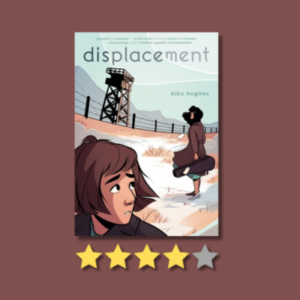
“Kiku is on vacation in San Francisco when suddenly she finds herself displaced to the 1940s Japanese-American internment camp that her late grandmother, Ernestina, was forcibly relocated to during World War II.
These displacements keep occurring until Kiku finds herself “stuck” back in time. Living alongside her young grandmother and other Japanese-American citizens in internment camps, Kiku gets the education she never received in history class. She witnesses the lives of Japanese-Americans who were denied their civil liberties and suffered greatly, but managed to cultivate community and commit acts of resistance in order to survive.”
Review:
Displacement is a heartfelt story of a Japanese-American girl who learns first hand about the tragedies of the WWII internment camps in the United States. Kiku time travels back to the time when her grandmother was a young girl facing the relocation of her family. It is a scary time for all Japanese-Americans. Seeing it through the eyes of a young adult really brings the emotions alive. You can feel how sad, scared and confused people would be during this time. It was interesting to learn about the life the Japanese-Americans created within the camps. They were not all of the same background and there were divisions in the camps that I didn’t expect. Kiku has a relationship with another Japanese-American girl. I found this part of the story to be unrealistic for the time period. It would not have been possible for two Japanese-American girls to be publicly affectionate and accepted during this time period in history. While this part of the story is warm and charming it just isn’t realistic. Kiku lives just one wall over from her grandmother (as a teenager) in the camps but doesn’t connect with her. This seems to leave the reader wondering why they don’t meet and what could have been if they did. I was hoping that part of the story would develop farther. As Kiku travels back to her present life she learns more about the fear that Japanese-Americans continued to face even well after World War II had ended. In the 1970s there was talk of the camps being opened up again. For Kiku’s family the events in the camps are never put to rest. Even in the present time she sees how the American government puts restrictions on specific groups of people coming into the United States, based on religion or ethnicity. Kiku wants to see a time of change and equality for all people. This is a powerful message of not just American history but our present too.
Classroom & Curricular Connections:
- Social Studies / US History: This graphic novel provides a powerful, firsthand perspective on World War II Japanese-American internment camps, civil liberties violations, and the lasting intergenerational trauma of relocation policies. It also serves as an excellent bridge to discuss 20th-century history alongside modern-day immigration and civil rights issues.
- English Language Arts (ELA): Perfect for analyzing literary devices in graphic formats, specifically how time-travel frameworks can be used to unpack historical trauma, memory, and personal identity.
- Social-Emotional Learning (SEL): Highly relevant for themes of displacement, fear, survival, finding community in adversity, and the processing of grief and generational trauma.
Diversity & Representation Note:
The book offers essential representation of the Japanese-American experience during World War II, bringing to light the diverse backgrounds, internal divisions, and acts of resistance within the internment camps. It also incorporates LGBTQ+ representation through Kiku’s relationship with another young woman, though the reviewer notes this aspect may feel slightly modernized relative to the actual historical constraints of the 1940s.
Readalikes:
- They Called Us Enemy by George Takei
- We Hereby Refuse: Japanese American Resistance to Wartime Incarceration by Frank Abe and Tamiko Nimura