 Published: 2026
Series: N/A
Author: Laekan Zea Kemp
Illustrator: Heidi Moreno
Genres: YA Fiction, YA NonFiction, Fiction, Realistic Fiction, Magical Realism
Audience (Grade Levels): 6, 7, 8, 9
Number of Stars: 4 Stars
Goodreads Link: The Chismosas Only Book Club
Triggers: Discussion of periods, anxiety/panic attacks, some romance/kissing scenes but nothing explicit in any way.
Review By: Jenna Ballard, Chittenango Middle School
Publisher’s Summary
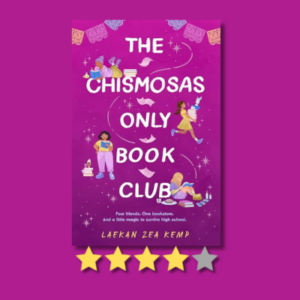
The Sisterhood of the Traveling Pants meets Mexikid in this heart-warming novel with illustrations about four friends and the magical bookstore that holds them together. Cat, Sofia, Ana, and Mari are best friends. Nothing, nada, can break their bond. When Cat’s mom scolds them for their loud cackling at the bookstore, calling them a bunch of chismosas, the name sticks. Cat creates the The Chismosas Only Book Club, giving the girls a way to stay connected as they begin high school.
But ninth grade is hard, and it seems like no amount of conchas y libros y risas at Milagro’s Books, founded generations ago by Cat’s great-great-great-grandmother, can repair the ever-growing cracks in their friendship. But maybe the spirit of Milagro herself can . . .Brimming with whimsy and heart, and woven with black-and-white graphic novel chapters, this enchanting book celebrates the magic of friendship, the embrace of ancestors, and the power of stories to hold us together.
Also available in Spanish, from Vintage Español.
Review
The Chismosas Only Book Club by Laekan Zea Kemp is a charming coming-of-age novel about four Latina best friends in New Mexico. The publisher’s tagline calls it “The Sisterhood of the Traveling Pants meets Mexikid,” which, in my opinion, is pretty spot on: Kemp weaves in Mexikid-style humor and whimsical cartoons along with subtle magical realism a la Traveling Pants. But instead of magical blue jeans, it’s an enchanted bookstore that has been in Cat’s family for generations and always seems to know what each girl needs at a certain time. The title comes from Cat’s mom calling the girls a bunch of “chismosas,” meaning busybodies or gossips, a designation the girls readily accept for the new club that will hold their friendship together as they forge their own paths as high school freshmen.
Each reader will likely see part of themselves in one of the four very different main characters. There’s Cat, the impulsive drama queen, Ana, the overwhelmed perfectionist, Sofia, the amateur witch, and Mari, the quirky artist. Chapters alternate between each girl’s point of view and distinct voice, with overlapping themes of finding your identity, standing up for yourself, navigating new crushes, and coming to terms with family secrets. There is diverse representation among main and side characters, such as Sofia (who has a crush on a female classmate), Ana (who struggles with anxiety and panic attacks), a nonbinary theater teacher, and many of the characters referencing their Mexican heritage. The characters, friendships, and community feel authentic. Each girl is allowed to be flawed and make their own mistakes, which young readers will find relatable and engaging.
Mari’s chapters are typically accompanied by a brief black and white graphic novel section meant to show the character’s own sketchbook, and text message conversations occasionally add another multimedia element that could make this novel a great transition for a student who typically chooses to read exclusively graphic novels. I listened to this novel primarily on audiobook, and it was fascinating to listen to how they interpreted the cartoons for an audio format–though I always went back to the print book after to look at the cartoons myself and see what I may have missed. This exercise could be a really fun ELA or even art activity. Teachers can select one or more excerpts from Mari’s sketchbook. Students would listen to the audio performance for those excerpts first and try to imagine what they think is happening based on the words, music, and sound effects that are utilized. Then the teacher could share the visual from the print book to see how it compares to their imaginations. This could lead to a great discussion on visual vs. oral storytelling, what is missed or gained in each medium, and how our own experiences can shape how we interpret a story.
Classroom & Curricular Connections
- ELA / Art (Visual vs. Oral Storytelling): The multimedia structure combining text, text message conversations, and Mari’s sketchbook panels provides an excellent opportunity to analyze media types. Teachers can select excerpts from Mari’s sketchbook, have students listen to the audio performance first to imagine the scene through sound, music, and dialogue, and then compare it to the print graphics to examine how visual and auditory elements convey narrative.
- SEL (Social-Emotional Learning): The story provides realistic entry points for SEL discussions around managing perfectionism, anxiety, panic attacks, standing up for oneself, and navigating shifting friendships during major life transitions like entering high school.
- Diversity & Representation: This title highlights authentic Latinx representation through its focus on four Mexican-American best friends, their community, and ancestral heritage in New Mexico. It meaningfully includes LGBTQ+ representation (such as a female crush and a nonbinary teacher) alongside realistic depictions of mental health struggles like anxiety and panic attacks.
Readalikes
- Dress Coded by Carrie Firestone
- Listen to the Girls by Chrystal D. Giles
- The Girls of Skylark Lane by Robin Benway