 Published: 2023
Series: N/A
Author: Eleanor Shearer
Illustrator: N/A
Genres: Historical Fiction, Black Fiction, Fiction, Historical, Literary Fiction, Race, Adult, Family, Contemporary
Audience (Grade Levels): Adult readers / Grades 11-12
Number of Stars: ⭐⭐⭐⭐⭐ (5/5 stars)
Goodreads Link: River Sing Me Home
Triggers: Sexual assault, moderate profanity, violence, and inhumane treatment of enslaved people
Review By: Sarah Williams
Publisher’s Summary:
The master of the Providence plantation in Barbados gathers his slaves and announces the king has decreed an end to slavery. As of the following day, the Emancipation Act of 1834 will come into effect. The cries of joy fall silent when he announces that they are no longer his slaves; they are now his apprentices. No one can leave. They must work for him for another six years. Freedom is just another name for the life they have always lived. So Rachel runs.
Away from Providence, she begins a desperate search to find her children–the five who survived birth and were sold. Are any of them still alive? Rachel has to know. The grueling, dangerous journey takes her from Barbados then, by river, deep into the forest of British Guiana and finally across the sea to Trinidad. She is driven on by the certainty that a mother cannot be truly free without knowing what has become of her children, even if the answer is more than she can bear. These are the stories of Mary Grace, Micah, Thomas Augustus, Cherry Jane and Mercy. But above all this is the story of Rachel and the extraordinary lengths to which a mother will go to find her children…and her freedom.
Review:
The history of slavery in the US is often the setting of historical fiction. Books such as Homegoing, The Color Purple, Stamped, Between the World and Me, as well as many other texts, have addressed slavery in the US but few texts revolve around slavery in other places. This book´s initial setting of Barbados was one element that drew me in. It is also different as the book includes what happens to slaves who are freed in Barbados following the Emancipation Act of 1834, something I have not really read about. When I learned that this book was based on true stories of women who did look for their own children after the Act was passed, something the author learned about from her trips to the Caribbean, I was more intrigued.
Once I began reading I was drawn into the story of Rachel as she is ¨freed¨ by the Act only to be told she is not actually freed, instead being forced to apprentice with her master, owing him years of work on his plantation. She chooses to not remain on the plantation, instead running and hiding from those who sought to bring her back. As a mother I was drawn to her desperation and longing to find her surviving children, a quest that gives her the courage to run and to search for her children in other places, including Trinidad. She is a strong woman character, one who has lost many children to both death and slavery, but one who does not give up.
I really enjoyed going on Rachel´s journey, which is narrated beautifully by Shearer. Her characters are crafted carefully to be realistic, while also touching the reader’s heart. Her narrative, much like the river featured in the title, flows effortlessly and pulls you in. Shearer´s prose is lyrical and evocative, allowing me to truly understand Rachel´s journey, one that lingered with me even after I finished reading this beautiful text. The cruelty of slavery, the pain of loss, and the triumph of redemption are all motifs that Shearer builds throughout this powerful narrative and make it so worth reading.
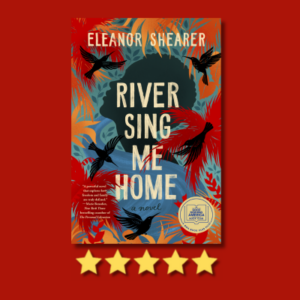
The book boasts an exceptionally evocative cover that perfectly captures the profound and dangerous nature of Rachel’s trek, immediately drawing in readers of high-quality historical fiction. I highly recommend this masterpiece to high school librarians, educators, and book club leaders looking for texts that expand our understanding of global history. It is a stunning 5-star addition that offers immense academic and emotional value to secondary collections.
Classroom & Curricular Connections:
- Social Studies / World History: This text connects deeply to units on the transatlantic slave trade, European colonization in the Caribbean, and the global impact of the British Emancipation Act of 1834.
- ELA / Literary Fiction: Serves as a stellar mentor text for studying the motifs of redemption, the structural flow of historical narratives, and how authors weave real oral histories into fictional storytelling.
- Extension Activity / Library Application: Ideally suited for upper-level high school independent reading, AP European or World History literature circles, and high school library book clubs. As an extension activity, students can research the archival records of the Caribbean post-1834 apprenticeship system and compare historical data with Rachel’s experiences across Barbados, British Guiana, and Trinidad.
- Diversity & Representation: River Sing Me Home provides invaluable and meaningful representation by focusing on Black characters and narratives in a non-US setting. It expands the scope of traditional historical fiction by illuminating the specific cultural experiences, resilience, and perspectives of enslaved and “apprenticed” people in the Caribbean.
Readalikes:
- The Sweetness of Water by Nathan Harris
- The Ballad of Jacquotte Delahaye by Briony Cameron
- All That She Carried by Tiya Miles