 Review By: Anonymous
Published: 2024
Genres: Coming of Age, Historical Fiction, LGBTQ+, Contemporary, Realistic Fiction
Audience: Grades 9–12, Adult
Number of Stars: ★★★★☆ (4/5)
Goodreads Link: Libertad
Content Warnings: Political violence, grief/loss, homophobia, and social unrest.
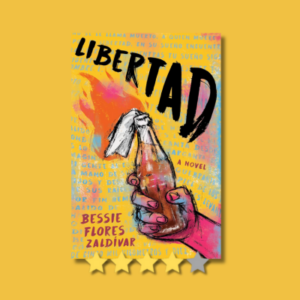
Publisher’s Summary
A queer YA coming-of-age set during the rigged Honduran presidential election, about a young poet discovering the courage it takes to speak her truth about the people and country she loves.
As the contentious 2017 presidential election looms and protests rage across every corner of the city, life in Tegucigalpa, Honduras, churns louder and faster. For her part, high school senior Libertad (Libi) Morazán takes heart in writing political poetry for her anonymous Instagram account and a budding romance with someone new. But things come to a head when Mami sees texts on her phone mentioning a kiss with a girl, and Libi discovers her beloved older brother, Maynor, playing a major role in the protests. As Libertad faces the political and social corruption around her, stifling homophobia at home and school, and ramped-up threats to her poetry online, she begins dreaming of a future in which she doesn’t have to hide who she is. Then the ultimate tragedy strikes, and leaving her family and friends—the only home she’s ever known—might be her only option.
Review
Libertad by Bessie Flores Zaldívar is a powerful coming-of-age novel set in Honduras, a country marked by a rocky political climate, widespread dissatisfaction, and a long history of protesting and violence, particularly in the capital city of Tegucigalpa. Against this backdrop, Zaldívar tells a deeply personal story that helps students understand how national unrest can shape individual lives.
Libertad is born on Honduran Independence Day, a symbolic detail that mirrors her ongoing struggle to define her own identity. As she navigates adolescence, Libertad is caught between family expectations, shifting friendships, and a country that may not fully accept her life choices. She struggles to find her place within her friend groups while also worrying about her future, a conflict that will feel very familiar to many students.
As Libertad prepares to graduate, she faces a difficult and emotionally charged decision: should she leave Honduras to study in the United States, or should she stay and fight for a better future in her home country? This question lies at the heart of the novel and invites meaningful discussion about migration, opportunity, loyalty, and responsibility, all topics that are highly relevant to today’s students.
Libertad’s family life adds another layer of complexity to the story. Her mother and abuela work long hours to support the household, while the family grapples with violence and grief that threaten their sense of stability. These experiences are portrayed with honesty and sensitivity, showing how political and social unrest can deeply affect family dynamics.
I believe students would learn a great deal from reading Libertad. Many will identify with Libertad’s struggles with identity, friendship, family obligations, and future plans. The novel offers rich cultural context and authentic perspectives, making it an excellent choice for classroom discussion. It would work especially well in world language classrooms where it can support conversations about culture.
🗺️Historical & Geographic Context
Understanding Libertad’s world requires a look at the geography and the specific political tensions of 2017. The city of Tegucigalpa serves as more than just a setting; its layout and history of protest are integral to the plot.
🗳️ The 2017 Crisis
The novel is set during a pivotal moment in Honduran history. The 2017 presidential election was marred by allegations of fraud and led to massive nationwide protests.
| Factor | Influence on Libertad’s Journey |
| The Election | Creates the tension that fuels Libi’s anonymous political poetry. |
| The Protests | Involves her brother, Maynor, and forces the family to confront physical danger. |
| Social Corruption | Mirrors the homophobia Libi faces at school, showing systemic exclusion. |
🎒 Classroom & World Language Applications
Libertad is a treasure trove for cross-curricular activities, particularly in Social Studies and Spanish classrooms:
- Poetry as Activism: Libi uses Instagram to share her voice. Students can analyze her poems (or create their own) to see how art functions as a tool for political resistance.
- The Migration Dilemma: The “Push-Pull” factors of migration are central here. Libertad isn’t just looking for “better”; she is often fleeing “dangerous.”
- Identity & Symbolism: Discuss the significance of Libi being born on Independence Day. How does her personal quest for “liberty” (Libertad) reflect the country’s struggle?