 Review By: Anonymous
Published: 2024
Genres: Poetry, Nonfiction, Indigenous / Native American Literature
Audience: Grade 12, Adult
Number of Stars: ★★★★★ (5/5)
Goodreads Link: Mother
Content Warnings: Adoption, separation from birth family, mother-child trauma, and intergenerational trauma.
Publisher’s Summary
Mother is a stunning, multimorphic work of poetry and prose about Indigenous identity. The work is rooted in an intimate reality: an Indigenous child is adopted out of her tribe and raised by a non-Indian family. As an adult finding her way back to her origins, our unnamed narrator begins to put the pieces of her birth family’s history together through the stories told to her by her mother, father, sister, and brother, all of whom remained on the reservation where she was born.
Through oral histories, family lore, and imagined pasts and futures, a collage of their community builds, raising profound questions about adoption, inheritance, and Indigenous identity in America. Through poetic vignettes whose unconventional forms mirror the nonlinear, patchwork process of constructing a sense of self, M.S. RedCherries has crafted an indelible and utterly original work about the winding roads that lead us home.
Review
Mother by M.S. RedCherries is a poetry collection that explores identity, motherhood, adoption, and Indigenous experience through deeply personal and reflective poetry. Rather than following a traditional plot, the book unfolds emotionally, with poems that move between memory, questioning, grief, and healing. RedCherries uses clear, intentional language to examine the impact of separation from biological family and culture, and the long process of understanding where one comes from and how that shapes a person’s sense of self, connection and belonging in society.
From a school counseling lens, this book felt especially meaningful in how it gives voice to emotions many students struggle to name. These might include loss, identity confusion, and the desire for connection and belonging. The poems are emotionally heavy at times, but they feel honest and true. This is a book that benefits from being read slowly, over time allowing time for processing.
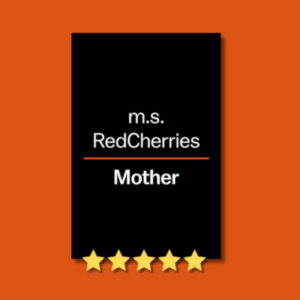
I would recommend this title to adult readers, educators, counselors, and older students in high school or college, particularly those interested in Indigenous studies, counseling, social work, or education. There are no illustrations, and while the cover is thoughtful and fitting, it may not immediately attract younger readers. This is not a book children would likely choose independently, but it could be a valuable resource for adults working to support youth through family or identity-related experiences.
Themes in this book include identity development, intergenerational trauma, adoption, motherhood, and cultural reclamation. Academic connections can be made to social-emotional learning, Indigenous literature, and discussions around family diversity and resilience. Activities could include reflective journaling, poetry writing, or conversations focused on identity and healing. Overall, this book offers important representation and insight, and it would be a meaningful addition to professional, academic, or counseling-focused library collections. I recommend!
🎨 The Patchwork Self: Identity Construction
The narrator uses “multimorphic” forms—a mix of poetry and prose—to reflect how identity is rebuilt after being severed. For students or adults navigating “identity confusion,” the structure of the book itself is a metaphor for the healing process.
🔍 Understanding Intergenerational Trauma
The collection touches on the complex “inheritance” of trauma within Indigenous communities, particularly regarding adoption and the removal of children from their tribes.
| Key Concept | Manifestation in Mother | Counseling Application |
| Oral History | Reconstructing family through shared stories. | Encouraging students to explore their “family lore” to find strength. |
| Cultural Reclamation | Finding the way back to tribal origins. | Supporting students in navigating diverse family backgrounds. |
| Ambiguous Loss | The grief of a family that exists but is out of reach. | Validating the “messy” emotions of students in foster care or adoption. |
📝 Professional & Academic Use
- For Counselors: Use specific vignettes to help students find the vocabulary for “unnamed emotions” related to family separation or belonging.
- For Literature Teachers: Analyze the “unconventional forms” used by RedCherries. How does the “patchwork” style of the poetry enhance the theme of a fragmented identity?
- For SEL Groups: Focus on the theme of Resilience. How does the narrator use storytelling as a tool for “cultural reclamation” and personal healing?