 Published: 2021
Author: Traci Sorell | Illustrator: Frané Lessac
Genre: Nonfiction / History / Picture Book
Audience: Grades 2–8
Number of Stars: ★★★★★ (5/5)
Goodreads Link: We Are Still Here!
Publisher’s Summary
Twelve Native American students present their research projects for Indigenous Peoples’ Day, but this isn’t your typical school report. Through these presentations, Traci Sorell explores the complex history of Native Nations in the United States—from forced assimilation and boarding schools to land relocation, tribal sovereignty, and cultural revival.
With vibrant, folk-art-inspired illustrations by Frané Lessac, this book challenges common misconceptions and centers Native perspectives. Each student’s report concludes with a powerful, repeated refrain: “We are still here!”—a declaration of survival, resilience, and an ongoing, thriving presence.
Review
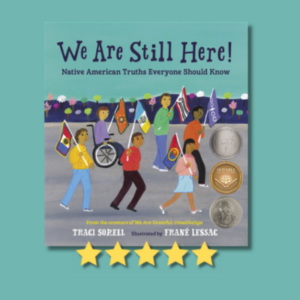
We Are Still Here! by Traci Sorell and illustrated by Frané Lessac is a powerful and informative nonfiction picture book that helps young readers better understand Native American history—and, importantly, the fact that Native people and cultures are still present and thriving today.
This book is widely considered essential, eye-opening, and educational. It combines history, storytelling, and visuals to challenge common misunderstandings. The story takes place in a Native community school, where students create presentations for Indigenous Peoples’ Day. Each student explores a different topic, such as assimilation and boarding schools, relocation and land policies, Native rights and activism, and language and cultural revival.
Each section ends with the repeated message: “We are still here!”—reinforcing the idea of survival, resilience, and ongoing presence. My fourth graders chorally read this part with feeling! The book is densely packed with facts about U.S. policies and their effects on Native Nations, both past and present. The student presentations and repetition make complex topics easier for kids to follow, while the vivid illustrations support understanding of historical events and cultural themes.
This book stands out because it challenges incomplete or inaccurate history taught in schools, centers Native voices and perspectives, and emphasizes that Native communities are active, diverse, and present today.
📜 Understanding Key Historical Concepts
The book addresses several U.S. government policies that significantly impacted Native Nations. Understanding these terms is essential for grasping the “truths” the author explores.
- Assimilation/Boarding Schools: Government policies that forcibly removed Native children from their homes to “Americanize” them, stripping them of their language, religion, and culture.
- Relocation/Termination: Mid-20th-century policies aimed at ending the government’s recognition of tribes and encouraging Native people to move to urban areas, often resulting in loss of land and tribal identity.
- Sovereignty: The inherent right of Native Nations to govern themselves, manage their lands, and provide for their citizens, independent of—but in relation to—the U.S. federal government.
🎒 Classroom & Curricular Connections
- Social Studies (Historical Eras): Use the students’ research topics to create a classroom timeline.
- Activity Idea: Assign students to research one of the twelve themes from the book (e.g., “The Indian New Deal” or “Tribal Sovereignty”) and create a mini-presentation to share with the class.
- ELA (Voice and Perspective): Discuss why the author chose to have students—rather than a narrator—deliver the information.
- Activity Idea: Compare how a traditional textbook explains the history of the boarding schools versus how the student in the book explains it. Which feels more “real”? Why?
- Civic Engagement (Activism): The book highlights ongoing activism.
- Activity Idea: Research current Native American activists or contemporary issues facing tribal communities today. Discuss why “Indigenous Peoples’ Day” is celebrated rather than (or in addition to) other holidays.
- Art & Culture: Use Frané Lessac’s illustration style as inspiration.
- Activity Idea: Have students draw a scene that represents their own community or heritage using bold colors and folk-art inspired details.