 Published: 2022
Series: N/A
Author: Liz Garton Scanlon
Illustrator: N/A
Genres: Middle Grade, Realistic Fiction, Grief, Family, Fiction, Mental Health, Friendship, Death, School
Audience (Grade Levels): 7-8, 9-10, Middle School
Number of Stars: ⭐⭐⭐⭐⭐ (5/5 stars)
Goodreads Link: Lolo’s Light
Triggers: Death of an infant, sudden infant death syndrome (SIDS), severe grief, guilt/anxiety
Review By: MaryAlice Brennan-Steere
Publisher’s Summary:
This is a truth about growing up: Once in your life, sometime after your first memory but before you can drive a car, something is going to happen to you that doesn’t happen to anyone else you know. It might be something good. It might be something bad, or special, or funny, or shocking. For Millie, it’s something really sad. Lolo, her neighbors’ infant daughter, dies unexpectedly, suddenly, inexplicably, on the night Millie babysits. It’s not Millie’s fault. There’s nothing she could have done. And there’s nothing she can do now.
So how does she go on? She does what you’ll do. She finds her way. This poignant and profound coming-of-age story portrays a tragic experience of responsibility and its poisonous flip side: guilt. Emotional and important, this is an honest and empathetic portrait of a girl at her most vulnerable—a mess of grief, love, and ultimately, acceptance—who must reckon with those most difficult of demons: death . . . and life.
Review:
Millie eagerly agrees to babysit Lola, her neighbors’ young daughter. The evening goes smoothly as Millie takes good care of the baby and eventually puts her to bed in her crib. However, tragedy unexpectedly strikes during the night, and Lola sadly passes away. Millie is devastated by this heartbreaking event, even though she is not at fault. The weight of shock and grief overwhelms her, causing her to withdraw from her relationships and isolate herself from her friends and family. In the midst of her emotional turmoil, a fifth-grade science experiment involving hatching chicks further intensifies Millie’s anxiety. She becomes fixated on the concepts of life and death, as well as the contrast between light and darkness. Through the careful and compassionate storytelling of author Liz Garton Scanlon, the book explores the wide range of emotions that young people may experience when faced with tragedy.
This is an exceptionally written, deeply moving story that tackles a subject many YA or middle-grade authors shy away from: the sudden death of an infant. Scanlon captures Millie’s voice with immense authenticity. Her writing style is gentle yet uncompromisingly honest, preventing the story from veering into melodrama while still honoring the absolute gravity of Millie’s grief. The pacing perfectly mirrors the slow, uneven trajectory of healing. Watching Millie pull away from her support systems is painful, but her journey toward accepting that she could not control or prevent the tragedy is profoundly rewarding.
Teens and middle school students who appreciate deeply emotional, character-driven realistic fiction like The Thing About Jellyfish will find themselves entirely engrossed in Millie’s world. The story recognizes that grief is a complex and challenging process, with numerous layers to navigate. It serves as a valuable resource for middle school students who possess empathy and compassion, as well as for those who have encountered life-altering events themselves. I highly recommend this book for school librarians and upper elementary or middle school educators looking to build an empathetic collection.
Classroom & Curricular Connections:
- Social-Emotional Learning (SEL): The narrative acts as an ideal catalyst for conversations surrounding irrational guilt, grief, anxiety, and learning how to process sudden, uncontrollable life changes. Millie’s emotional path provides a safe blueprint for students processing difficult feelings.
- Science / STEM Connection: The classroom chick-hatching project provides a beautiful, natural intersection with science curriculum. Teachers can use this element to explore life cycles, biology, and environmental dependencies while tying the scientific observations back to the book’s thematic focus on life, death, and vulnerability.
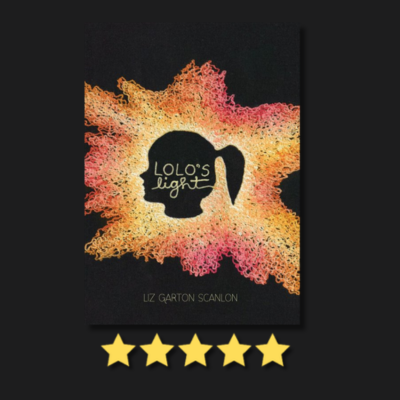
- Extension Activity / Library Application: This title would excel as an independent reading recommendation or a central text for a middle school book club exploring themes of resilience. In a classroom or library setting, an excellent extension activity would be a “Grief and Light” reflective journaling project. Students can explore how the book utilizes contrasting motifs of darkness (grief, isolation) and light (the incubator, healing, community) to track a character’s emotional recovery.
- Diversity & Representation Note: Lolo’s Light expands traditional library representation by offering a diverse perspective on the grieving process itself. Rather than showing a clean, linear recovery, it showcases a messy, authentic portrayal of mental health struggles in youth, validating the isolating experiences of young people dealing with trauma. It reminds readers that tragedy does not discriminate and that finding community is essential to survival.
Readalikes:
- The Thing About Jellyfish by Ali Benjamin
- Counting by 7s by Holly Goldberg Sloan
- See You in the Cosmos by Jack Cheng