Published: 2021
Author & Illustrator: Juana Martinez-Neal
Genres: Fiction, Children’s Literature, Picture Books, Animals, Nature, Environment, Indigenous, Family, Activism
Audience (Grade Levels): Elementary Grades K-4
Number of Stars: ⭐⭐⭐⭐⭐ (5/5 Stars)
Goodreads Link: Zonia’s Rain Forest
Triggers: None
Review By: Kassidy Seary
Publisher’s Summary:
A heartfelt, visually stunning picture book from the Caldecott Honor and Sibert Medal Winner illuminates a young girl’s day of play and adventure in the lush rain forest of Peru.
Zonia’s home is the Amazon rain forest, where it is always green and full of life. Every morning, the rain forest calls to Zonia, and every morning she answers. She visits the sloth family, greets the giant anteater, and runs with the speedy jaguar. But one morning, the rain forest calls to her in a troubled voice. How will Zonia answer?
Acclaimed author-illustrator Juana Martinez-Neal explores the wonders of the rain forest with Zonia, an Asháninka girl, in her joyful outdoor adventures. The engaging text emphasizes Zonia’s empowering bond with her home, while the illustrations—created on paper made from banana bark—burst with luxuriant greens and delicate details. Illuminating back matter includes a translation of the story in Asháninka, information on the Asháninka community, as well as resources on the Amazon rain forest and its wildlife.
Review:
Zonia’s Rainforest is a beautiful book that highlights the ongoing problem of habitat destruction and deforestation. Zonia lives in the Peruvian Amazon Rainforest and is part of the Asháninka which is the biggest Indigenous group living there. Every day she looks forward to the rainforest speaking to her and returning its call. She enjoys chatting with the Andean cock-of-the-rock birds and playing hide-and-seek with the spectacled caiman.
One day Zonia finds a portion of her forest cut down. She runs to inform her mother who tells her the forest is once again speaking to her. Zonia vows to answer. The book leaves us with the promotion that we must all answer the call. With few words, we are transported to Zonia’s world. We experience her connection to the rainforest and learn how she and the people of Asháninka have an interdependent relationship with it.
I love the gorgeous illustrations showing Zonia playing joyfully with her animal neighbors. This story is perfect for young children and shows the importance of the rainforest from the perspective of a child living there. I think Zonia’s mother instructing her to listen to the rainforest and Zonia taking it upon herself to create change is a wonderful way to demonstrate that children can be agents of change. The back includes the story written in the Asháninka language, the history of the Asháninka people, the threats to the Amazon, and the names of the animals in the book.
Classroom & Curricular Connections:
- Science & Environmental Studies: Explores themes of ecosystems, rainforest wildlife (like sloths, giant anteaters, jaguars, and river dolphins), deforestation, and human-nature interdependence.
- Social Studies & World Cultures: Introduces elementary students to the Asháninka community, the largest Indigenous group living in the Peruvian Amazon rainforest, their traditions, and geographical environment.
- Social Emotional Learning (SEL): Inspires young readers regarding civic responsibility, active listening, environmental stewardship, and demonstrating that children can be powerful agents of change.
Extension Activity / Library Application:
- “Answering the Call” Change-Agent Pledges: Inspired by Zonia’s vow to answer the rainforest’s cry, have students discuss local environmental concerns (such as littering or recycling at school). Students can write down their own actionable pledges to create environmental change on green leaf cutouts to build a collaborative classroom or library “Rainforest Tree” display.
- Art Style & Media Exploration: Guide students to evaluate Juana Martinez-Neal’s distinct artwork. Use the backmatter to discuss how the illustrations were created on handmade banana-bark paper, and have students experiment with textures or natural materials in their own nature drawings.
Diversity & Representation Note:
The book provides critical, positive Indigenous representation by centering on a spunky and joyful Asháninka girl. It highlights the deep cultural wisdom of listening to nature and successfully frames the fight against deforestation through the lived perspective of the Amazon’s native protectors, accompanied by invaluable backmatter that features historical information and a complete translation into the Asháninka language.
Readalikes:
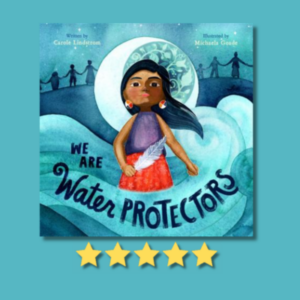
- We Are Water Protectors by Carole Lindstrom
- The Great Kapok Tree by Lynne Cherry
- The Water Walker by Joanne Robertson