 Published: 2021
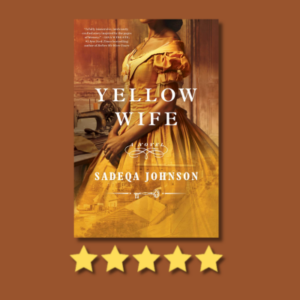
Author: Sadeqa Johnson
Genres: Historical Fiction, Fiction, Historical, African American, Race, Civil War, Coming of Age
Audience (Grade Levels): Grades 9-12
Number of Stars: 5 Stars
Goodreads Link: Yellow Wife
Triggers: Systemic racism, extreme physical violence, human trafficking/slavery, torture, sexual abuse/forced concubinage
Review By: Heather Kent
Publisher’s Summary:
In the tradition of Wench and Twelve Years a Slave, this harrowing story follows an enslaved woman forced to barter love and freedom while living in the most infamous slave jail in Virginia.
Born on a plantation in Charles City, Virginia, Pheby Brown was promised her freedom on her eighteenth birthday. But when her birthday finally comes around, instead of the idyllic life she was hoping for with her true love, she finds herself thrust into the bowels of slavery at the infamous Devil’s Half-Acre, a jail where slaves are broken, tortured, and sold every day. Forced to become the mistress of the brutal man who owns the jail, Pheby faces the ultimate sacrifice to protect her heart in this powerful, thrilling story of one slave’s fight for freedom.
Review:
This is the heartbreaking story of the sale of slaves in Virginia. Although this is a tough read as you encounter the violence and abuse that the slaves suffered throughout this time period, the author found a way to build hope as we meet the characters and suffer along with them in beautifully written historical fiction. I found the character development to be incredible and I could not put it down. It was a part of history that I was not familiar with. It was very educational. I wish that this was a book that they would use in school for assigned reading.
Classroom & Curricular Connections:
- U.S. History / African American Studies: This highly educational novel illuminates a dark, frequently overlooked facet of the domestic slave trade: the urban slave jails of Richmond, Virginia, specifically the infamous “Devil’s Half-Acre” (Lumpkin’s Jail). It serves as a vital historical tool to explore the economic machinery of slavery, human commodification, and the stark contrast between plantation life and urban transit jails.
- English Language Arts / Women’s Studies (Agency & Maternal Sacrifice): The text offers an intense exploration of intersectional trauma and survival. Educators can guide high school students to analyze how Pheby navigates structural powerlessness, evaluating the horrific sacrifices enslaved women were forced to make to protect their children and retain their humanity under total systemic oppression.
Diversity & Representation:
-
The novel strongly promotes diversity, equity, and inclusion by amplifying authentic African American history and centering the narrative entirely on a complex, resilient Black female protagonist. By refusing to sanitize the brutal physical and psychological realities of the American slave trade, the text honors the true survival strategies, individual agency, and profound resistance of enslaved women whose histories have often been minimized or erased.
Readalikes:
- Twelve Years a Slave by Solomon Northup
- Wench by Dolen Perkins-Valdez
- The Kitchen House by Kathleen Grissom