 Published: 2021
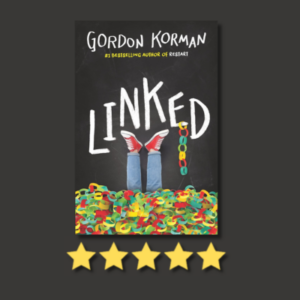
Author: Gordon Korman
Genres: Middle Grade, Realistic Fiction, Mystery, Fiction, Audiobook, Young Adult, School, Friendship
Audience (Grade Levels): Middle School, Grades 5-8
Number of Stars: 5 Stars
Goodreads Link: Linked
Triggers: Anti-Semitism, hate symbols/vandalism (swastikas), historical racism/hate groups (Ku Klux Klan, cross burning), bullying and social isolation
Review By: Molly Clark
Publisher’s Summary:
Link, Michael, and Dana live in a quiet town. But it’s woken up very quickly when someone sneaks into school and vandalizes it with a swastika. Nobody can believe it. How could such a symbol of hate end up in the middle of their school? Who would do such a thing?
Because Michael was the first person to see it, he’s the first suspect. Because Link is one of the most popular guys in school, everyone’s looking to him to figure it out. And because Dana’s the only Jewish girl in the whole town, everyone’s treating her more like an outsider than ever.
The mystery deepens as more swastikas begin to appear. Some students decide to fight back and start a project to bring people together instead of dividing them further. The closer Link, Michael, and Dana get to the truth, the more there is to face-not just the crimes of the present, but the crimes of the past.
Review:
It’s been a long time since a book grabbed my attention like this. I think we may finally have a modern book to use when teaching the Holocaust. After the appearance of the swastika the school begins intensive tolerance training and the reader learns about the horrors of the Holocaust along with the students in the story. The news of the swastika brings up the reality of past racism in town. It seems that the KKK had a presence in the past and held a large cross burning event twenty years prior. The emotions of the characters mirror the emotions our students may feel when they first learn about this part of history and talking points can be found throughout. While most students and citizens come together to stand against hate, the book is boldly realistic as it portrays some residents of the town as unsympathetic to pain caused by this hate. Without giving anything away, the book also teaches a lesson on forgiveness and acceptance of responsibility. This book would make a terrific read aloud or book club book. Pair it with the memoir Chance by Uri Shulevitz.
Classroom & Curricular Connections:
- Modern Holocaust Education: As highlighted by the reviewer, this novel serves as an excellent modern vehicle for introduces students to the history of the Holocaust. The school-wide “tolerance training” depicted in the text mirrors actionable educational practices, allowing teachers to introduce structural lessons about the horrors of WWII and systemic hate through a relatable, contemporary middle school lens.
- U.S. History / Sociology (Uncovering Local Racism): The book does not isolate hate to the past or to foreign soil; it confronts regional history, including a past Ku Klux Klan presence and cross burning in the town. This offers a curricular framework to explore how historical American hate groups operated, how prejudice lingers across generations, and how communities reconcile with institutionalized bias.
- Social-Emotional Learning (Accountability & Forgiveness): Rather than offering simple, neat solutions, the narrative deals with the complexities of accepting personal responsibility, facing the consequences of one’s actions, and the difficult process of community forgiveness.
Extension Activity / Library Application:
- “Paper Chain of Remembrance” Community Project: Inspired by the students in the novel who launch a collaborative project to combat divisiveness, create a physical or digital community building initiative in the library. Students can construct an interconnected link chain where each paper strip features a student-written message of inclusion, a historical fact about Holocaust resilience, or a pledge to stand against anti-Semitism.
- Paired Narrative Literature Circle: Following the reviewer’s explicit recommendation, design a comparative literature circle unit. Pair Gordon Korman’s fictional Linked with Uri Shulevitz’s autobiographical Holocaust memoir, Chance: Escape from the Holocaust, allowing students to analyze how the emotional weight of historical trauma is processed through realistic fiction versus first-hand historical accounts.
Diversity & Representation:
-
The novel addresses diversity, equity, and inclusion by focusing on the heavy social burden placed on Dana, the town’s only Jewish student, following an act of hate vandalism. By realistically portraying how microaggressions, isolation, and community apathy impact marginalized individuals, Korman challenges readers to critically analyze allyship, dismantle systemic prejudice, and actively speak out against hate symbols.
Readalikes:
- Restart by Gordon Korman
- The Night Diary by Veera Hiranandani
- Refugee by Alan Gratz